




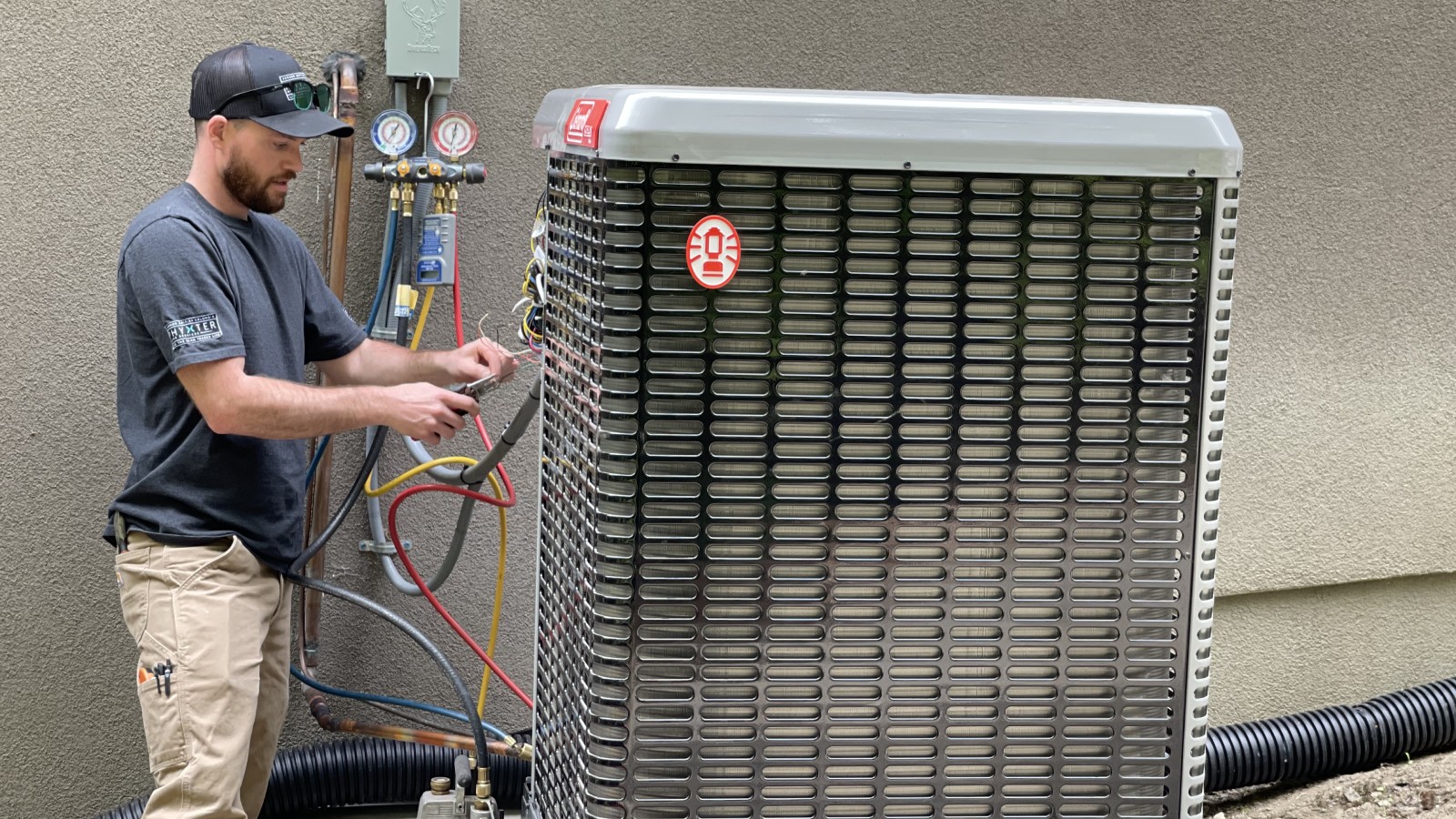

SOUTH COAST South Coast homeowners thinking about a heat pump have until Dec. 31 to have one installed at this year's Mass Save rebate levels. For systems installed on or after Jan. 1, Mass Save's standard rebates go down, by as much as $1,000 for an air source heat pump and $1,500 for a whole-home ground source system.
Mass Save is the energy efficiency program run by Eversource, National Grid, Liberty and its other sponsors, among them the Cape Light Compact, under three-year plans approved by the state Department of Public Utilities. Its whole-home and partial-home heat pump rebates go to customers who replace oil, propane, natural gas or electric baseboard heat.
What changes on Jan. 1
For an air source heat pump that is a home's only heating and cooling system, the whole-home rebate is $2,650 a ton in 2026, up to $8,500. For systems installed on or after Jan. 1, it drops to $2,350 a ton, capped at $7,500.
The partial-home rebate, for a heat pump that works alongside a boiler or furnace the household keeps, goes from $1,125 a ton, up to $8,500, to $1,000 a ton, capped at $7,500. The whole-home rebate for a ground source heat pump, which draws heat from the ground, falls from $13,500 to $12,000 per home. Mass Save counts tons by the equipment's rated cooling capacity, with 12,000 BTUs to the ton.
At those rates, a 3-ton whole-home system earns $7,950 this year and $7,050 next year, $900 less. A 4-ton system hits the cap either way, $8,500 now and $7,500 after Jan. 1. A 3-ton partial-home system goes from $3,375 to $3,000.
Mass Save's own cost example puts the average whole-home air source installation at $22,000, based on its 2022 program data. With the full $8,500 rebate, the homeowner pays $13,500. With the 2027 cap of $7,500, the same job would leave $14,500.
Who qualifies and what it takes
The rebates follow the utility account. A home replacing oil, propane or electric baseboard heat applies through a residential electric account where Cape Light Compact, Eversource, National Grid or Unitil is the Mass Save electric sponsor. A home replacing natural gas heat applies through a gas account with a gas sponsor such as Eversource, Liberty or National Grid. Under Mass Save's rules, a home whose power comes from a municipal light plant, such as the Taunton Municipal Lighting Plant, qualifies only if it heats with natural gas from one of the sponsors. A home heated with municipal gas does not qualify for the whole-home or partial-home rebates.
The heat pump must be on the program's qualified products list and put in by a contractor in the Mass Save Heat Pump Installer Network. For a whole-home or partial-home rebate, the home must be lived in full time through the heating season. A whole-home rebate also requires a weatherized house: one built in 2000 or later, one whose home energy assessment recommended less than $1,000 in weatherization, or one where weatherization recommended since 2013 has been done. Since Oct. 1, every application must include a photo of each outdoor unit's nameplate showing its serial number.
Equipment has to be installed by Dec. 31 to count for 2026, and the rebate form and paperwork for those jobs are due by Feb. 28, 2027. Mass Save says to allow eight weeks for a rebate to be processed.
Why the amounts are falling
The 2027 amounts trace back to a budget cut ordered last year. In its Feb. 28, 2025, order on the 2025 to 2027 Mass Save plan, the Department of Public Utilities told the utilities to cut $500 million from the plan's residential budget. The utilities' plain language summary of their response says the department noted "the increasing energy burden on ratepayers and the need to balance climate and equity goals against energy affordability."
In their April 30, 2025, compliance filing, the utilities brought the plan's total to $4.5 billion from $4.99 billion. They proposed a 32% cut to the statewide pool that pays standard heat pump rebates, the HEAT Loans tied to it and related sales, technical assistance and training costs. They also proposed lowering the most a whole-home heat pump rebate could pay, from a planned $9,000 to $8,500 in 2026 and from a planned $8,000 to $7,500 in 2027. A majority of the state Energy Efficiency Advisory Council had asked them to put weatherization ahead of heat pumps, the summary says. The department approved the compliance filings, with conditions, on June 30, 2025. The revised plan counts on heat pumps going into about 87,000 homes over the three years, down from 119,000 in the plan the utilities first filed. The $8,500 and $7,500 caps Mass Save uses for 2026 and 2027 are the ones that filing proposed.
What it means on the South Coast
The rebates matter most to homes that burn oil or propane. In Bristol County, about 53,200 of roughly 232,300 occupied homes, about 23%, heat mainly with fuel oil or kerosene, and about 8,600 use propane or other bottled gas, according to the Census Bureau's 2025 American Community Survey one-year estimates. In Plymouth County, about 55,200 of roughly 208,700 homes, about 26%, heat with oil, and about 14,800 use bottled gas.
Income-qualified households coming off oil, propane or electric resistance heat can get larger enhanced rebates, up to $16,000 for a whole-home air source system and up to $25,000 for ground source, or an air source system at up to no cost through the program's turnkey service. To get them, the household must verify its income first, finish all the weatherization its home energy assessment recommended and apply through a residential electric account with Cape Light Compact, Eversource, National Grid or Unitil. The same deadline applies: the equipment must be bought and installed by Dec. 31. Homeowners can also finance qualifying upgrades, heat pumps included, with a 0% HEAT Loan of up to $25,000.
Homes that already heat with a heat pump can also sign up for the lower winter delivery rates that began Nov. 1, covered in our story Enrolled heat pump homes pay 9.3 cents less a kilowatt-hour for National Grid delivery starting Nov. 1, 7.8 cents less at Eversource.
How to start
Mass Save recommends getting proposals from two or three installers in its network and offers a free virtual consultation with a decarbonization specialist. It lists 888-855-0340 for heat pump rebate questions. Rebates can be filed online at masssave.com or by mail.
Label: Reported by us, from the town's posted records.
Notes
Every rebate amount, date and rule comes from the Mass Save Sponsors' own pages for air source heat pumps, ground source heat pumps, enhanced income-based rebates and the HEAT Loan, read on Nov. 1. The history of the 2027 caps comes from the utilities' April 30, 2025, compliance filing and its plain language summary, and the department's June 30, 2025, order approving the filings, all in the Department of Public Utilities file for D.P.U. 24-140 through 24-149, read the same night. Heating fuel counts are the Census Bureau's 2025 American Community Survey one-year estimates, table B25040, rounded. The "as much as" figures, the dollar examples for 3-ton and 4-ton systems and the $14,500 figure are our arithmetic from the posted rates. We checked each date against a calendar.
Corrections
No corrections to this story. If something here is wrong, tell us. Every correction is dated on the story and listed in our public log.
Sources (7)
- Mass Save: Air Source Heat Pumps (rebates, 2027 changes, eligibility)Program page of the Mass Save Sponsors. 2026 whole-home $2,650 a ton up to $8,500, partial-home $1,125 a ton up to $8,500, basic $250 a ton up to $2,500; on or after Jan. 1, 2027, whole-home $2,350 a ton and partial-home $1,000 a ton, each capped at $7,500; install Jan. 1 to Dec. 31, 2026, forms by Feb. 28, 2027; serial number photo required since Oct. 1, 2026; cost example $22,000 average, $8,500 rebate, $13,500 net. Read Nov. 1, 2026.
- Mass Save: Ground Source Heat PumpsWhole-home $13,500 per home in 2026, $12,000 for projects installed on or after Jan. 1, 2027; partial-home $2,000 a ton up to $13,500; enhanced up to $25,000; municipal electric and municipal gas eligibility. Read Nov. 1, 2026.
- Mass Save: Enhanced Heat Pump RebatesIncome-qualified rebates: air source whole-home up to $16,000, ground source up to $25,000, turnkey air source up to no cost; equipment purchased and installed by Dec. 31, 2026. Read Nov. 1, 2026.
- Mass Save: 0% Interest Financing (HEAT Loan)0% financing up to $25,000 for qualifying upgrades, heat pump projects included; applicant must be the homeowner. Read Nov. 1, 2026.
- D.P.U. 24-140 through 24-149: Program Administrators, April 30, 2025 compliance filing, Plain Language Summary (Department of Public Utilities)Summarizes the Feb. 28, 2025, order ($500 million residential cut), plan total $4.5 billion from $4.99 billion, 32% cut to the prescriptive electrification pool, related HEAT Loans and STAT costs, whole-home cap $8,500 in 2026 and $7,500 in 2027 (planned $9,000 and $8,000), about 87,000 homes with heat pumps. Filed April 30, 2025. Read Nov. 1, 2026.
- D.P.U. 24-140-A through 24-149-A: Order on compliance filings (Department of Public Utilities)Compliance filings approved subject to modifications, disallowances and conditions. Issued June 30, 2025. Read Nov. 1, 2026.
- U.S. Census Bureau: 2025 American Community Survey 1-year, table B25040, House Heating FuelBristol County: 232,305 occupied units, fuel oil or kerosene 53,213 (margin 3,509), bottled gas 8,594. Plymouth County: 208,672, fuel oil 55,205 (margin 3,828), bottled gas 14,828. Read Nov. 1, 2026.