




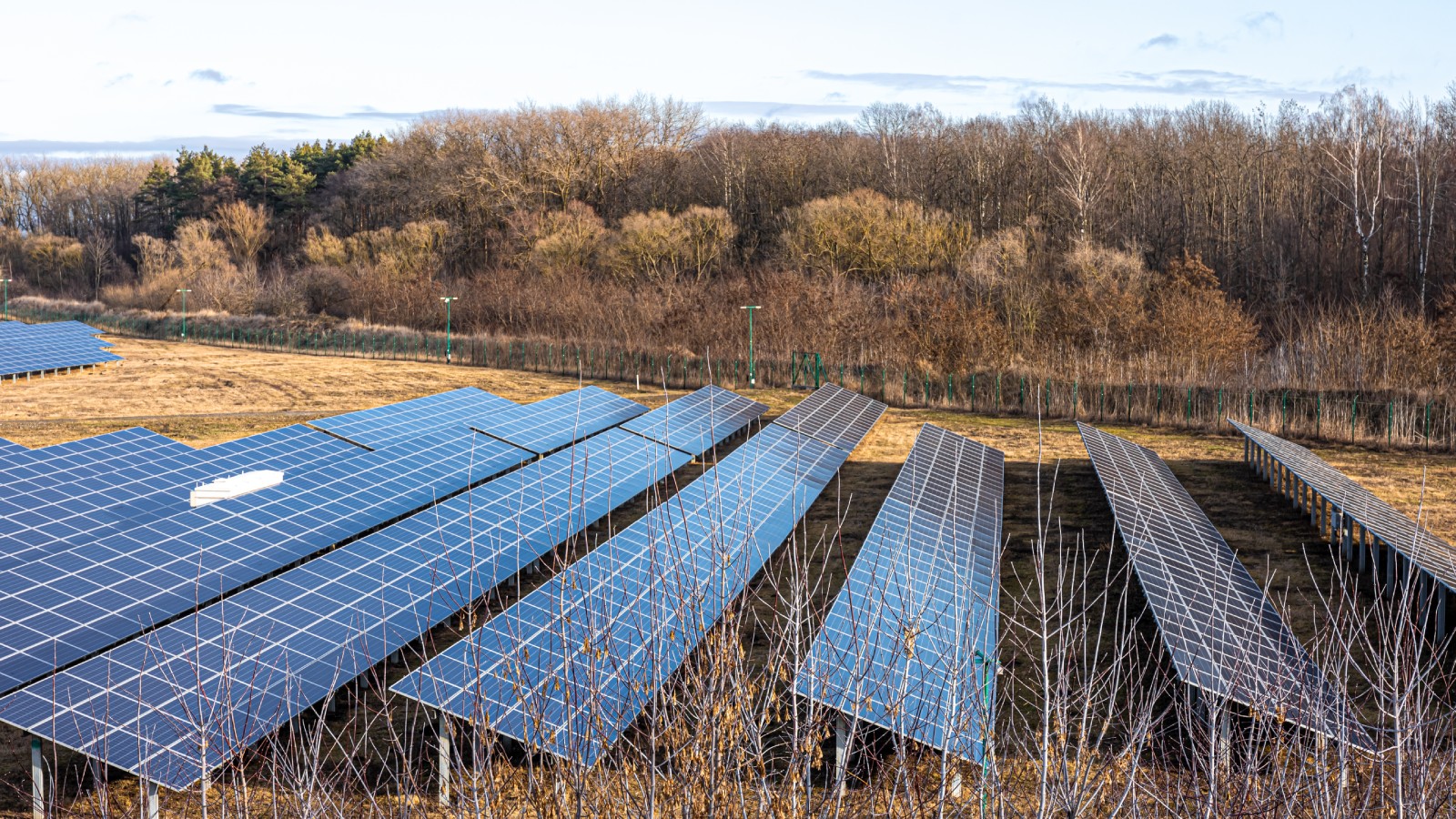
SOUTH COAST More than 190 ground-mounted solar arrays had been built across 2,322 acres of Bristol and Plymouth counties when Mass Audubon and Harvard Forest counted them for a 2023 report, and the report says many more are planned for the region.
The state's climate plan counts on much more solar by 2050, and the same report that tallied the South Coast arrays calls building it "an absolute imperative." Mass Audubon also counts more than 5,000 acres of forest, wetlands and farmland developed for solar statewide since 2010, and the report notes that southeastern Massachusetts holds the second largest area of coastal pine barrens in the country, habitat for more than 200 state-listed species.
In Wareham, A.D. Makepeace says site work has started for an approved array on a 66-acre hilltop site off Tihonet Road, where a state filing says about 65 acres will be cleared, and the Planning Board approved a long-fought array off Fearing Hill Road on Nov. 9 under a court settlement. In Carver, a solar and battery project beside a cranberry bog at 104 Tremont St. goes back before the Conservation Commission on Wednesday, Nov. 18. In Rochester, neighbors have questioned the underground power line for a Cushman Road array since 2024. At the same time, the state has rewritten its solar incentive rules and the way towns permit clean energy projects, while the courts and the attorney general have narrowed how far a town can go in saying no.
What the numbers show
Statewide, hundreds of ground-mounted solar projects covering more than 8,000 acres were built from 2010 to 2020, and nearly 2,000 more acres have been converted since, according to the Mass Audubon and Harvard Forest report, "Growing Solar, Protecting Nature," released in October 2023. That count covers all land under the arrays, while Mass Audubon's figure of more than 5,000 acres counts forest, wetlands and farmland. The report says clearing forests for arrays released more than 510,000 metric tons of carbon dioxide, about what 112,000 passenger cars put out in a year.
Mass Audubon's 2020 land use study, "Losing Ground," estimated that ground-mounted solar accounted for about 6,000 acres, or one quarter of all new development in Massachusetts, from 2012 to 2017. Without it, the study said, the state's rate of development would have dropped to 10.2 acres a day.
The 2023 report found that large ground-mounted projects have concentrated on big parcels in Worcester, Bristol and Plymouth counties, and that Worcester, Hampden, Plymouth and Bristol counties together hold 75% of the state's ground-mounted solar capacity. If current siting continues, the report projects the loss of more than 20,000 more acres of the most valuable wildlife habitat in the state, including 9,000 acres in the pine barrens of southeastern Massachusetts.
Mass Audubon and Harvard Forest have not published a newer county count, but federal and state records track the building since 2023 in other ways, and each is a different measure from the 2023 acreage count, so none of the figures below can be added to it or subtracted from it.
A federal database updated in April 2026 maps 110 ground-mounted arrays of 1 megawatt or more in Bristol and Plymouth counties through 2025, with the panels alone covering about 1,355 acres, according to the U.S. Geological Survey and Lawrence Berkeley National Laboratory, a narrower measure than the 2023 count because it leaves out smaller arrays and the cleared land around the panels. The database shows six of those arrays, about 64 acres of panels, coming online in 2024 and 2025, in Westport, Dighton and Acushnet and at two sites in Plymouth County.
The U.S. Energy Information Administration's inventory shows 122 solar plants large enough to report to the agency operating in the two counties as of September 2026, a combined 324 megawatts, up from 111 plants and about 293 megawatts at the end of 2023, in a count that does not separate ground-mounted arrays from a few large rooftop ones. The same inventory lists 12 more plants in the two counties, totaling 45 megawatts, as planned, seven of them under construction.
State records point the same way, with the Department of Energy Resources' list of projects in its SMART solar incentive program, updated June 1, 2026, counting 28 operating arrays larger than 25 kilowatts in the two counties, a combined 67 megawatts, in the two land use categories the program treated as greenfield sites, and 13 more, about 40 megawatts, qualified for the program but not yet running, four of them in Wareham, though the state's lists give megawatts and towns, not acres.
| Project | Town | Land and clearing | Where it stands |
|---|---|---|---|
| 140 Tihonet Road PV+ES, A.D. Makepeace land | Wareham | 66.2-acre site, about 65.3 acres to be cleared, about 5 megawatts AC (2021 state filing). A 2022 filing says up to 1.2 million cubic yards of material may be removed. | Approved by the town in 2020 and 2021, the company says, and it says site work has begun. |
| 91 and 101 Fearing Hill Road, Wareham MA 3, LLC | Wareham | About 18 acres of panels on a site of about 44 acres of woodland that would be clear-cut (The Wareham Week, 2024); the settlement calls for fewer panels, bars battery storage and protects nearby wells (The Wareham Week, 2026). | Approved Nov. 9, 2026, under a court settlement that requires reforestation after the array is taken down. |
| 0 Cushman Road, BWC Snows Pond LLC | Rochester | 2.39 megawatts DC on 12.55 acres of a 31.23-acre parcel in a groundwater protection district (The Wanderer, 2024). | Conservation Commission order of conditions approved in February 2024. |
| 0 Cushman Road, Cushman Road Solar LLC (ReWild Renewables), a separate filing | Rochester | Array whose utility connection was redesigned in 2024 as underground lines on Robinson Road, across easements on private land (The Wanderer, 2024). | Conservation Commission extended its order of conditions three years in February 2024. |
| 104 Tremont St., Federal Pond Solar, LLC | Carver | Ground-mounted and dual-use arrays, which share land with farming, with battery storage, in and beside wetlands tied to a cranberry bog. | Conservation Commission hearing continued to Nov. 18; the developer asked to continue the Planning Board hearing to Dec. 8. |
| 320 County Road, Parallel Products Solar Energy LLC | Wareham | An existing sand or gravel pit (The Wareham Week). | Planning Board hearing continued to Dec. 14. |
The case for building
The state's Clean Energy and Climate Plan for 2050 estimates Massachusetts could need 8 gigawatts of solar by 2030 and at least 27 gigawatts by 2050, the 2023 report says. Mass Audubon's page for the report says the state will need "five to seven times as much solar energy in 2050 as we have now." The page says building it quickly is urgent in the face of the climate crisis, and the report says ground-mounted arrays will be part of it, along with rooftops and parking lot canopies.
Developers and landowners make their own climate case, and a greenhouse gas analysis by Applied Economics Clinic, filed with the state in 2021 for three Wareham solar projects on A.D. Makepeace land, found the projects "offset roughly 30 times more CO2 emissions than is lost in potential carbon sequestration" from the trees cut down. For the Tihonet Road site alone, it estimated a reduction of 245,335 metric tons of carbon dioxide from 2021 to 2040.
The state filings also say the solar fields replaced a bigger plan. The land is part of the Tihonet Mixed Use Development, a parcel of about 5,667 acres in Wareham, Carver and Plymouth, where the phase that now holds the solar fields was once planned for 1,856 homes, condominiums and apartments plus commercial and industrial space, according to the 2022 filing, which says all of those homes were eliminated and partly replaced with farming, renewable energy and open space. The 2021 filing says the solar projects "will result in fewer impacts to the environment than the previously-approved residential developments." It says the landowner had transferred 436.84 acres near Myles Standish State Forest to the state for conservation, and the 2022 filing says the permit holder will give Wareham $21,320, $22,255 and $36,500 in mitigation money for the three projects, the estimated economic benefit of their tree clearing, for mitigation projects the town chooses.
Solar also brings money to some towns, and at a Dighton Planning Board meeting Sept. 16, member Leonard Hull noted that solar developments are among the town's leading sources of tax revenue, the minutes say. When the state finished its newest solar incentive rules in August 2025, the national Solar Energy Industries Association said they chart "a strong path for community and commercial scale solar and storage in Massachusetts," in the words of Valessa Souter-Kline, its Northeast regional director.
The case for the trees
Mass Audubon and Harvard Forest say the forests being cleared do climate work of their own. Forests cover more than 60% of Massachusetts and pull carbon from the air at a rate equal to about 10% of the state's yearly greenhouse gas emissions, the 2023 report says. Mass Audubon's campaign page says, "When we convert them to clean energy projects, we're using one tool against climate change but losing another."
The report argues the state does not have to choose. It estimates rooftops and parking lot canopies could hold more than 30 gigawatts of solar, and that low-impact sites could support about 25 gigawatts of ground-mounted solar. Counting what has already been cleared since 2010, it projects 39,150 acres of forest lost to ground-mounted solar by 2050 if current siting continues, compared with 7,556 acres in a scenario that steers arrays away from forests, farms and habitat. That second path costs somewhat more in energy, about $900 million in present value, but the report estimates that replacing the lost forest carbon another way could cost $940 million to $980 million. The report also cites a 2022 state survey in which more than 85% of residents surveyed said the state should site solar on rooftops, parking lots, landfills and other developed land rather than clearing forests and converting farmland.
"Massachusetts residents have clearly stated that they want more solar energy, but not at the expense of our forests and farmlands," Mass Audubon President David O'Neill said when the report came out. The state's energy commissioner at the time, Elizabeth Mahony, said then that the report and a state study had both found Massachusetts "has ample space and potential to reach our solar and decarbonization goals."
Fearing Hill Road residents have raised tree removal, flooding, possible groundwater contamination and the effect on wildlife, The Wareham Week reported. At Tihonet Road, the Community Land and Water Coalition, a Plymouth-based environmental group, calls the work next to Tihonet Pond sand mining and has asked the town for any earth removal permit or exemption; A.D. Makepeace says it is "nothing more than site preparation for an approved project."
What the state changed
Two state changes in the past two years shape what gets built next, and the first is in the Solar Massachusetts Renewable Target program, known as SMART, a ratepayer-funded incentive the state Department of Energy Resources runs for solar projects. The third version of the program, as first issued in emergency rules in June 2025, made ground-mounted projects larger than 250 kilowatts ineligible if their footprint overlapped the state's BioMap core habitat or the top 20% of land statewide for carbon that clearing would release or keep from being stored through 2070, and other protected land such as protected open space and wetland resource areas was also off limits, the trade publication New Project Media reported.
Under those rules, ground-mounted projects larger than 250 kilowatts on land not previously developed, and not eligible for location-based adders such as the brownfield or dual-use farming adder, had to pay a mitigation fee, which replaced an older cut in incentive rates, with the fees going into a state trust fund for conservation and biodiversity programs, according to an analysis by the law firm Foley Hoag. The rules as first issued also added incentives for arrays on landfills, brownfields and parking lot canopies, New Project Media reported. The department issued its final SMART 3.0 regulations in late August 2025, Solar Power World reported, and the Solar Energy Industries Association said the final version addressed problems raised during the review so that the program's site selection and energy storage requirements meet their goals.
The second change is in permits, where the 2024 climate law, An Act promoting a clean energy grid, advancing equity and protecting ratepayers, lets a developer of a solar project under 25 megawatts ask a town for one consolidated permit covering every local approval. The town must issue a single final decision within 12 months of a complete application; if it does not, the town must issue a permit carrying the state's common conditions. Anyone "substantially and specifically affected" can ask the director of the energy facilities siting division at the state Department of Public Utilities to hear the case again from the start within 30 days of the decision. The same law has the state set pre-filing rules that include public meetings before an application is filed, and a state method for judging site suitability under which developers must avoid or minimize harm to the land and environment and mitigate what they cannot avoid.
Towns are also writing new rules for battery storage, which many solar projects now include. Lakeville's guide to its Nov. 18 special town meeting says the state requires cities and towns to adopt a battery storage bylaw by the end of 2026, and warns that without one, "applicants would be able to propose and install BESS without any local requirements or provisions for safety." Dighton's Planning Board shelved a proposed pause on new solar and battery sites this month, South Coast 360 reported, after a draft that said the town has nine approved large solar installations.
What towns can and cannot do
State zoning law has protected solar since 1985, when the Zoning Act was amended to say no local bylaw "shall prohibit or unreasonably regulate the installation of solar energy systems," except where necessary to protect public health, safety or welfare. In 2022, the Supreme Judicial Court applied that line for the first time in Tracer Lane II Realty v. City of Waltham, ruling that Waltham could not block an access road to a solar array in Lexington when the districts where the city said it allowed solar made up less than 2% of its land, the Boston Bar Journal reported.
Since then, the Appeals Court has applied the same test in a Walpole case, putting the burden on the town to justify any rule that materially limits solar, and the attorney general this year disapproved a temporary solar and battery moratorium in Blandford, finding that even a temporary ban works as a prohibition without evidence of a specific health or safety risk, according to an analysis published in May by the law firm Rich May. The firm wrote that the attorney general "has consistently disapproved solar moratoria" since the 2022 ruling.
When the Fearing Hill project came back in 2024, Wareham Planning Board member Carl Schultz said "the law is the only thing we are allowed to consider," and on Nov. 9 Chair Jane Gleason voted for the revised decision "with deep regret and great sadness," saying, "We have been painted all the way into the corner," The Wareham Week reported. Our Nov. 11 story has the details of the settlement and the court remand.
Conservation commissions remain one of the tools towns hold, ruling on work in and near wetlands under the state Wetlands Protection Act and local bylaws; Carver's commission is reviewing the Federal Pond project under both. Rochester's commission required biodegradable hydraulic oil in construction equipment for the BWC Snows Pond array because of its steep slope, The Wanderer reported. Wareham's earth removal bylaw requires a Select Board permit and a fee to remove earth, with exceptions for farming and for grading tied to permitted construction. Settlements and conditions can add protections, like the Fearing Hill reforestation terms. And when the Tihonet Road land, taxed as farmland under Chapter 61A, was headed for solar, the town had the right to buy it first; Wareham's selectmen voted 3-2 in April 2021 to waive that right, The Wareham Week reported.
Rochester's neighbors
Two separate solar filings name Cushman Road in Rochester, and for the one by Cushman Road Solar LLC, the question has been what happens on private land outside the array. At a Planning Board meeting in October 2024, Joseph Harrison of ReWild, representing Cushman Road Solar LLC, said the connection was part of Eversource substation upgrades and that the plan had changed from four new poles on Robinson Road to underground lines, which cost more but would save trees there, The Wanderer reported. Two Robinson Road property owners who granted easements for the line said the new plan would disturb the neighborhood, one asked how emergency vehicles would reach her house during trenching, and a neighbor said that part of the street floods easily. In November 2024 the board extended the project's special permit because Eversource's substation was not ready, Board Chair Arnold Johnson said, and he said the developer has a right to work within the easements it was granted, the paper reported.
Who owns the land
In some of these projects, the company that owns the land and the company that builds the array are different. A.D. Makepeace, which calls itself North America's largest cranberry grower, owns the Tihonet land; the 2021 filing was prepared for Borrego Solar Systems, the developer at the time, and lists the three Wareham sites as the 10th, 11th and 12th projects in that phase of the company's plan. The Fearing Hill developer is Wareham MA 3, LLC, and the Carver applicant is Federal Pond Solar, LLC. ReWild Renewables, whose Joseph Harrison spoke for the Cushman Road developer, says on its website that it develops and runs solar sites "in ways that conserve the land and promote biodiversity."
What residents can do
Most decisions on a project come at public hearings, and anyone can attend and speak. The Wareham Select Board, which issues earth removal permits, meets Tuesday, Nov. 17, at 7 p.m. in Room 520 of the Multi-Service Center, 48 Marion Road, with a resident comment period and a Zoom option. The Carver Conservation Commission's hearing on the Federal Pond Solar project at 104 Tremont St. is continued to Wednesday, Nov. 18, in Meeting Room 1 at Carver Town Hall, 108 Main St., where its hearings are noticed for 7 p.m., and the developer has asked the Carver Planning Board to continue its hearing to Tuesday, Dec. 8. Lakeville voters decide the battery storage bylaw, which needs a two-thirds vote, Wednesday, Nov. 18, at 6:30 p.m. at the Apponequet Regional High School auditorium, 100 Howland Road, and the Wareham Planning Board's hearing on the County Road gravel pit array resumes Monday, Dec. 14.
- Watch the agenda: planning boards, zoning boards and conservation commissions post notice of every meeting under the state Open Meeting Law, usually on the town's website, and wetlands hearings are announced in public notices that invite all interested parties.
- Ask for the file: under the state public records law, a town must provide records or answer in writing within 10 business days, and a requester can appeal to the state Supervisor of Records.
- Go to the pre-filing meetings: the 2024 law has the state set pre-filing rules for the new consolidated permit, including public meetings a developer must hold before applying.
- Bring bylaws to town meeting: towns can still set reasonable rules on where and how arrays and batteries are built, like the setbacks, decommissioning and safety requirements in Lakeville's proposed battery bylaw, and a new bylaw takes effect only once the attorney general approves it.
- Watch for appeals: when a town issues a consolidated permit, people substantially and specifically affected have 30 days to ask the director of the state's energy facilities siting division for a new hearing.
A.D. Makepeace's Tihonet Road work and the town's earth removal rules are in our Nov. 14 story. South Coast 360 will add the answers from the people and agencies asked for this story as they come in.
Label: Reported by us, from the town's posted records.
Notes
Every fact comes from the Mass Audubon and Harvard Forest report and Mass Audubon's own pages and 2020 land use study, A.D. Makepeace's 2021 and 2022 state environmental filings, the state's 2024 climate law and Zoning Act, agendas and notices posted by Carver and Lakeville, Dighton's Planning Board minutes and packet, the A.D. Makepeace and ReWild Renewables websites, and South Coast 360's earlier stories. The Supreme Judicial Court and Appeals Court rulings and the attorney general's Blandford decision are described from the Boston Bar Journal and the law firm Rich May; the state solar incentive rules from New Project Media, the law firm Foley Hoag, Solar Power World and the Solar Energy Industries Association; Wareham and Rochester project details and quotes from The Wareham Week and The Wanderer, each credited in the text. We read the records Nov. 4 to Nov. 15, 2026, and checked each date and weekday against a calendar. Not heard yet: the Community Land and Water Coalition, A.D. Makepeace, ReWild Renewables, the Carver and Rochester conservation commissions, Mass Audubon, the state Department of Energy Resources, the Solar Energy Business Association of New England, and a Rochester resident who asked to talk with us.
Corrections
No corrections to this story. If something here is wrong, tell us. Every correction is dated on the story and listed in our public log.
Sources (36)
- Mass Audubon and Harvard Forest: Growing Solar, Protecting Nature, full report StoryMap (October 2023)190 arrays and 2,322 acres in Plymouth and Bristol counties; pine barrens; 8,000 acres 2010 to 2020 and nearly 2,000 since; four counties 75%; 20,000 and 9,000 acres projected; Clean Energy and Climate Plan figures; forest cover and 10%; 39,150 and 7,556 acres; $940 million to $980 million. Read Nov. 14, 2026.
- Mass Audubon and Harvard Forest: Growing Solar, Protecting Nature, Executive Summary (2023)510,000 metric tons, 112,000 cars; concentration in Worcester, Bristol and Plymouth counties; over 30 GW and about 25 GW; about $900 million; 2022 DOER survey over 85%. Read Nov. 14, 2026.
- Mass Audubon: Growing Solar, Protecting NatureOver 5,000 acres since 2010; five to seven times as much solar by 2050. Read Nov. 14, 2026.
- Mass Audubon: A Campaign to Grow Solar and Protect NatureQuote on converting natural lands; SMART described as ratepayer-funded. Read Nov. 14, 2026.
- Mass Audubon press release: New Report Finds Mass. Has the Space to Meet its Clean Energy Goals While Protecting Nature (Oct. 2, 2023)Quotes from David O'Neill and DOER Commissioner Elizabeth Mahony; more than 500 projects. Read Nov. 14, 2026.
- Mass Audubon: Losing Ground, Nature's Value in a Changing Climate (2020)About 6,000 acres of ground-mounted solar 2012 to 2017, one quarter of new development, 10.2 acres a day. Read Nov. 14, 2026.
- Expanded Environmental Notification Form, ADM TMUD Wareham PV+ES Projects, EEA No. 13940 (Beals and Thomas for Borrego Solar Systems, March 15, 2021)140 Tihonet Road site, clearing and megawatts; Applied Economics Clinic analysis, 30 times and 245,335 metric tons; 5,666.91-acre parcel; 2010 plan; fewer impacts line; 436.84 acres; 10th to 12th projects. Read Nov. 14, 2026.
- ADM Tihonet Mixed Use Development Final Environmental Impact Report, EEA No. 13940 (2022)Up to 1.2 million cubic yards; tree clearing payments to Wareham of $21,320, $22,255 and $36,500. Read Nov. 14, 2026.
- A.D. Makepeace Company home page"North America's largest cranberry grower." Read Nov. 14, 2026.
- The Wareham Week: Planning Board approves Fearing Hill solar farm "with deep regret" (Nov. 9, 2026)Settlement terms, reforestation, residents' concerns, Gleason quotes. Read Nov. 14, 2026.
- The Wareham Week: Fight for Fearing Hill solar project fires up again (June 24, 2024)About 18 acres of panels, about 44-acre woodland site, clear-cutting. Read Nov. 14, 2026.
- The Wareham Week: Hearing on County Road solar project continued to December (Nov. 9, 2026)320 County Road gravel pit, Dec. 14. As reported in our Nov. 11 story. Read Nov. 11, 2026.
- Carver Planning Board agenda, revised, Nov. 10, 2026Federal Pond Solar, LLC, 104 Tremont St., ground-mounted and dual-use arrays with battery storage, continued to Dec. 8 at the Carver Police Station. Read Nov. 14, 2026.
- Carver Conservation Commission notice, Nov. 4, 2026 (canceled), Chair Savery Moore104 Tremont St. Notice of Intent, DEP File SE126-710, wetlands tied to a cranberry bog, continued to Nov. 18; hearings noticed for 7 p.m., Meeting Room 1, Town Hall. Read Nov. 14, 2026.
- Town of Lakeville: Resident's Guide, Special Town Meeting, Nov. 18, 2026Article 6 battery storage bylaw, state deadline, 6:30 p.m. at Apponequet Regional High School. Read Nov. 14, 2026.
- Acts of 2024, Chapter 239: An Act promoting a clean energy grid, advancing equity and protecting ratepayersSection 21 of chapter 25A: under 25 megawatts, consolidated permit, 12 months, constructive approval, de novo review within 30 days, pre-filing meetings, site suitability and mitigation hierarchy. Read Nov. 14, 2026.
- Massachusetts General Laws, chapter 40A, section 3Solar provision. Read Nov. 14, 2026.
- Boston Bar Journal: Tracer Lane II Realty, LLC v. City of Waltham (Courtney Simmons, Aug. 4, 2022)June 2, 2022 SJC decision, 489 Mass. 775; 1985 amendment; access road; less than 2% of Waltham. Read Nov. 14, 2026.
- Rich May, P.C.: Solar Zoning After Tracer Lane II: Old Bylaws, New Risks (Harley Racer, May 20, 2026)Kearsarge Walpole; Attorney General decision, Case No. 12153 (Blandford); moratoria disapproved since 2022. Read Nov. 14, 2026.
- New Project Media: POLICY: Massachusetts DOER makes changes to SMART program (2025)Ground-mounted projects over 250 kWac ineligible on BioMap core habitat or top 20% forest carbon; new adders for canopies, landfills and brownfields. Read Nov. 14, 2026.
- Foley Hoag LLP, Energy and Climate Counsel: SMART 3.0 Program Key Changes and Features: Mitigation Fees (July 2025)Mitigation fee for ground-mounted projects over 250 kW on land not previously developed; replaces the greenfield subtractor; trust fund. Read Nov. 14, 2026.
- Solar Energy Industries Association: Solar Industry Applauds Release of Final SMART 3.0 Regulations (Aug. 29, 2025)Valessa Souter-Kline quote; the page answered 403 to Copy on Nov. 15, and the quote was read in Solar Power World. Read Nov. 14, 2026.
- Solar Power World: Massachusetts issues final SMART 3.0 regulations, sets solar incentive capacity for 2025 (Kelsey Misbrener, Sept. 2, 2025)Final regulations issued; Souter-Kline quote; SEIA on site selection requirements. Read Nov. 15, 2026.
- U.S. Geological Survey and Lawrence Berkeley National Laboratory: U.S. Large-Scale Solar Photovoltaic Database, version 4.0 (April 2026)Massachusetts records from the public API: 110 ground-mounted facilities of 1 MW or more in Bristol and Plymouth counties online through 2025, about 1,355 acres of panel footprint; six online in 2024 and 2025, about 64 acres. Read Nov. 15, 2026.
- U.S. Energy Information Administration: Preliminary Monthly Electric Generator Inventory, September 2026Bristol and Plymouth solar: 122 operating plants, 324.0 MW, against 111 plants, 292.9 MW in service through 2023; 12 planned plants, 45 MW, seven under construction. Read Nov. 15, 2026.
- Massachusetts Department of Energy Resources: Qualified SMART Solar Tariff Generation Units (updated June 1, 2026)Units over 25 kW in Land Use Category 2 or 3 in Bristol and Plymouth county towns: 28 approved, 67.1 MW AC; 13 qualified, 39.7 MW AC, four in Wareham. Read Nov. 15, 2026.
- Dighton Planning Board minutes, Sept. 16, 2026Hull on solar and tax revenue, as reported in our Nov. 4 story. Read Nov. 4, 2026.
- South Coast 360: Dighton's solar and battery storage pause will not go to Town Meeting (Nov. 4, 2026, updated Nov. 5)Nine approved large-scale installations, from the Planning Board packet. Read Nov. 14, 2026.
- South Coast 360: Wareham Planning Board approves Fearing Hill Road solar under court settlement (Nov. 11, 2026)Schultz 2024 quote from The Wareham Week. Read Nov. 14, 2026.
- South Coast 360: Makepeace says Wareham solar work has begun (Nov. 14, 2026)Burke quote; coalition records request; earth removal bylaw; 2021 votes including the 3-2 Chapter 61A waiver; Select Board Nov. 17. Read Nov. 14, 2026.
- The Wanderer: Biofuels Conditioned for Solar Project (Feb. 10, 2024)BWC Snows Pond LLC order of conditions, 2.39 MW, 12.55 of 31.23 acres, biofuels for the steep slope; Cushman Road Solar LLC extension. Saved copy read Nov. 14, 2026.
- The Wanderer: Neighbors Cite Neighboring Town Rulings (Jan. 29, 2024)BWC Snows Pond LLC application, groundwater protection district. Saved copy read Nov. 14, 2026.
- The Wanderer: Rochester Furthers Solar Development (Oct. 29, 2024)Harrison of ReWild on the Eversource upgrade and underground line; Robinson Road concerns. Saved copy read Nov. 14, 2026.
- The Wanderer: Solar Development and Approval Requests (Nov. 17, 2024)Johnson on easements. Saved copy read Nov. 14, 2026.
- ReWild Renewables home pageConserve the land quote. Read Nov. 14, 2026.
- Massachusetts General Laws, chapter 66, sections 10 and 10A10 business days; Supervisor of Records appeal. Read Nov. 14, 2026, for our Nov. 14 story.