



SOUTH COAST Nineteen South Coast cities and towns must put a combined $445.6 million of their own money into public schools in fiscal 2027, $22.8 million or 5.38% more than last year, under the state's Chapter 70 school funding formula, figures from the state Department of Elementary and Secondary Education show.
The formula sets an adequate spending level for every district, called the foundation budget. It then uses each community's property values and residents' incomes "to determine how much of the foundation budget should be funded from local property taxes," the department wrote, and Chapter 70 state aid pays the rest. A district must spend the sum of its required local contribution and its state aid, a floor the state calls net school spending. A town's contribution covers its own schools and its share of any regional districts it belongs to.
Who owes more
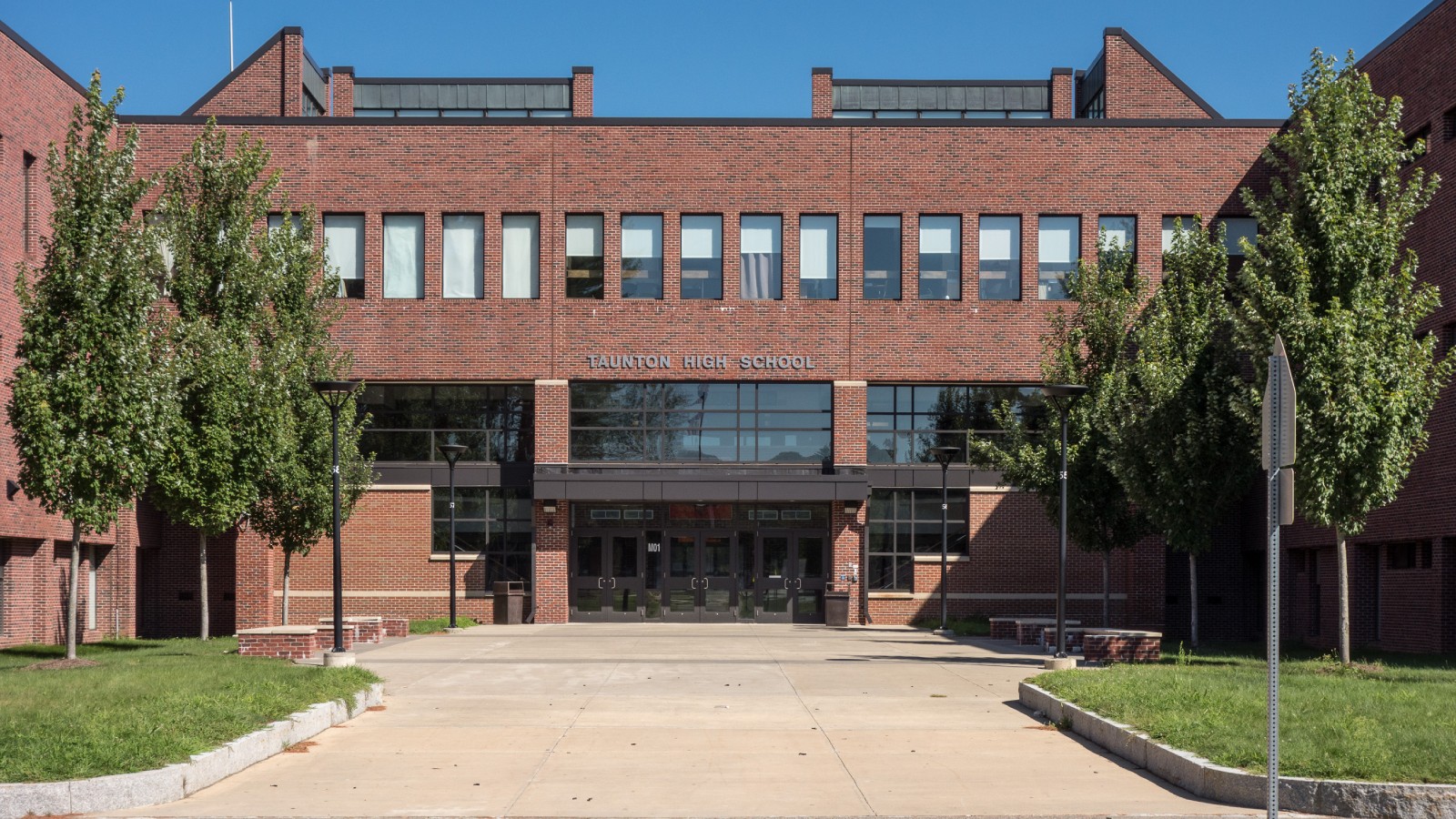
Fall River's required contribution rose the most, by $4.1 million or 8.7%, to $51.3 million. New Bedford's rose $2.9 million, or 6.3%, to $49.3 million, and Taunton's rose $2.8 million, or 5.3%, to $54.4 million, the largest required contribution in the region. Wareham's went up $1.8 million, Westport's $1.3 million, and Swansea's and Seekonk's $1.1 million each.
Mattapoisett is the only one of the 19 whose share went down, by $65,092 to $8.3 million. Dartmouth had the smallest increase in percentage terms, 2.1%, and Marion was next at 3.2%. Dartmouth, Marion, Mattapoisett and Rehoboth each pay 82.5% of the foundation budget for their students, the most the formula asks of any community.
| Community | Fiscal 2026 | Fiscal 2027 | Change |
|---|---|---|---|
| Acushnet | $11,886,311 | $12,591,169 | +5.9% |
| Berkley | $8,838,498 | $9,442,167 | +6.8% |
| Dartmouth | $44,023,382 | $44,963,884 | +2.1% |
| Dighton | $9,786,453 | $10,288,499 | +5.1% |
| Fairhaven | $18,837,062 | $19,567,940 | +3.9% |
| Fall River | $47,188,152 | $51,293,522 | +8.7% |
| Freetown | $12,988,840 | $13,617,499 | +4.8% |
| Lakeville | $17,204,725 | $18,192,277 | +5.7% |
| Marion | $8,216,811 | $8,481,896 | +3.2% |
| Mattapoisett | $8,369,124 | $8,304,032 | -0.8% |
| New Bedford | $46,406,172 | $49,343,683 | +6.3% |
| Rehoboth | $18,274,358 | $19,093,817 | +4.5% |
| Rochester | $8,893,690 | $9,487,789 | +6.7% |
| Seekonk | $21,905,956 | $23,014,398 | +5.1% |
| Somerset | $19,746,050 | $20,693,860 | +4.8% |
| Swansea | $20,659,026 | $21,776,679 | +5.4% |
| Taunton | $51,624,834 | $54,386,762 | +5.3% |
| Wareham | $27,636,221 | $29,435,339 | +6.5% |
| Westport | $20,317,489 | $21,579,205 | +6.2% |
What the state adds
The state budget Gov. Maura Healey signed July 9 puts $7.66 billion into Chapter 70 aid, $296.5 million or 4.03% more than last year, and every operating district gets at least $160 more per student. For most districts serving South Coast students, that minimum was the whole increase. Dartmouth's aid rose $508,960, Wareham's $361,280, Seekonk's $322,880, Swansea's $313,760, Fairhaven's $249,280 and Westport's $248,000. Dighton-Rehoboth gained $406,080, Freetown-Lakeville $417,120 and Old Rochester Regional $150,880.
In Westport, the town's required contribution, which also covers its share of regional districts, rose $1.26 million, while the Westport district's state aid rose $248,000.
The districts in Fall River, New Bedford and Taunton got far more. Fall River's aid rose $19.8 million, or 8.6%, to $250.6 million, about $1,496 more per student. New Bedford's rose $16.9 million, or 6.7%, to $271.2 million, about $1,197 more per student, and Taunton's rose $4.2 million to $109.6 million, about $499 more per student. The Greater New Bedford vocational district gained $3 million and the Greater Fall River vocational district $1.3 million.
When a district's required local contribution and last year's aid add up to less than its foundation budget, the state adds foundation aid to close the gap, the department wrote; 62 districts statewide get it this year, and the rest get the $160 minimum. Fall River's required contribution covers 15.8% of the foundation budget for its students and New Bedford's 13.8%, against formula targets of 21.21% and 20.73%.
How each share is set
Each community's requirement starts from last year's and grows by a municipal revenue growth factor, which the state Department of Revenue figures from "the most recent annual percentage change in each community's local revenues." Against a state average of 4.73%, Fall River's factor is 7.7%, Rehoboth's 6.26% and Berkley's 5.83%, while Fairhaven's is 2.88% and Somerset's 2.8%. Communities more than 2.5 percentage points below their target share get 1 or 2 points added to their growth factor, and Acushnet, Lakeville, Rochester and Somerset, each more than 7.5 points below target before the increment, got 2.
Enrollment moved as well, with Somerset's foundation enrollment falling from 1,606 students to 1,502 and Marion's from 372 to 344, while Fall River's rose from 13,106 to 13,241 and the statewide count fell by 14,626 students.
What comes next
South Coast communities are setting their fiscal 2027 property tax rates now. Average single-family tax bills rose in all 19 South Coast communities as 18 wait on new rates.
The department issues preliminary figures for the next year from the governor's budget proposal, as it did Jan. 28 for this year, when the proposal carried a $241.8 million aid increase, and the final budget added $54.8 million to that statewide.
Label: Reported by us, from the town's posted records.
Notes
Every figure comes from public records: the state Department of Elementary and Secondary Education's final fiscal 2027 Chapter 70 workbook, its July 9 explainer of the calculations, and its fiscal 2027 program pages. We read them on Oct. 29. The 19-community totals, the dollar and percentage changes and the gap between the preliminary and final statewide aid are our arithmetic from the department's own numbers; the per student aid changes are the department's.
Corrections
No corrections to this story. If something here is wrong, tell us. Every correction is dated on the story and listed in our public log.
Sources (4)
- Massachusetts Department of Elementary and Secondary Education: FY2027 Final Chapter 70 Aid and Net School Spending RequirementsProgram page dated July 9, 2026: $7,658,399,506 in aid, up $296,534,954 or 4.03%, $160 per pupil minimum aid, statewide foundation enrollment 905,307 to 890,681. Read Oct. 29, 2026.
- Massachusetts Department of Elementary and Secondary Education: FY27 Chapter 70 workbook (chapter-2027.xlsm)Sheets "Townwide Contributions" (required local contribution FY26 and FY27, municipal revenue growth factor, target local share, percentage of foundation) and "Comparison to FY26" (foundation enrollment and Chapter 70 aid by district, FY26 and FY27). Read Oct. 29, 2026.
- Massachusetts Department of Elementary and Secondary Education: FY27 Chapter 70 Aid and Required Contribution CalculationsDated July 9, 2026. How the foundation budget, target local share, municipal revenue growth factor, increments, foundation aid and net school spending work. Read Oct. 29, 2026.
- Massachusetts Department of Elementary and Secondary Education: FY2027 Preliminary Chapter 70 Aid and Net School Spending RequirementsDated Jan. 28, 2026, based on House 2: aid from $7,361,864,552 to $7,603,623,093, an increase of $241.8 million or 3.3%. Read Oct. 29, 2026.