





FALL RIVER Attorney General Andrea Joy Campbell sued U.S. Immigration and Customs Enforcement on Monday to stop agents from making civil arrests in Massachusetts courthouses without a judicial warrant, which state law has barred since Nov. 3.
State Sen. Michael Rodrigues of Westport pointed to Fall River in a statement Campbell's office released with the lawsuit. "A strong component of the PROTECT Act was to empower the Attorney General to hold ICE agents accountable for their actions against individuals, and especially families, for their recent unlawful activity in Medford, and in my district in Fall River," Rodrigues said.
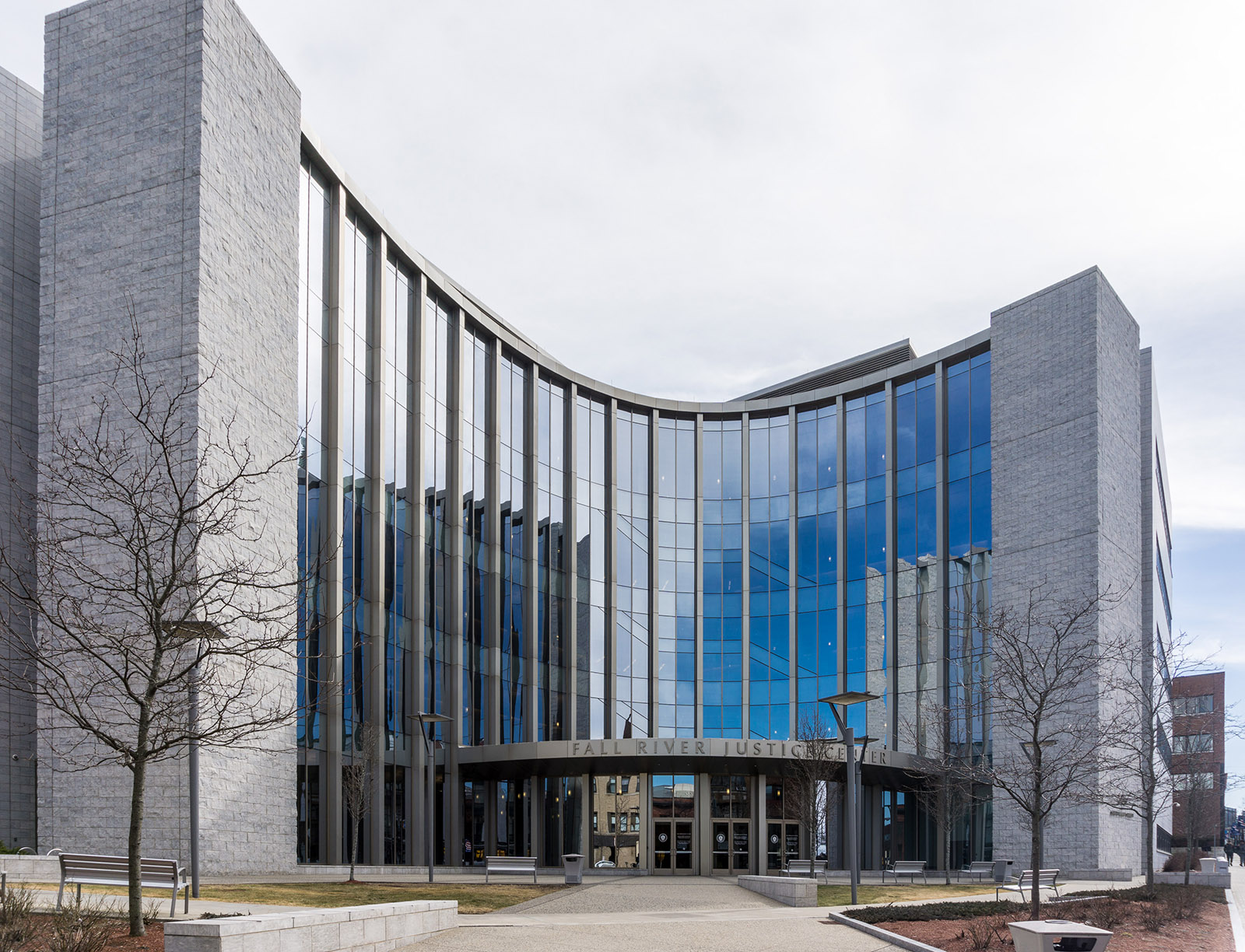
On Friday, Nov. 20, ICE agents arrested a man at the Fall River Justice Center after his arraignment there, The New Bedford Light reported. Campbell's office said ICE has arrested at least 38 people in Massachusetts courthouses without judicial warrants since the state's courthouse rules took effect. The Fall River Justice Center is one of the state courthouses those rules cover.
What the lawsuit says
The suit challenges a May 2025 ICE directive that allows arrests in state courts even where a state prohibits them, the attorney general's office said. A federal court in California ruled that policy unlawful and vacated it in June 2026, but ICE has kept making such arrests, the office said.
ICE arrested more than 600 people at Massachusetts state courthouses in 2025 and more than 500 in the first 10 months of 2026, according to the office. It said the complaint describes survivors of domestic violence who have been afraid to seek restraining orders, and a woman who did not report a rape because she feared being arrested if she had to testify. On Nov. 3, the office said, ICE arrested a defendant due for a criminal trial at a courthouse in Medford, keeping him from his court date. During enforcement activity at the same courthouse, the office said, agents damaged security barriers that the state must now replace at its own expense.
The office argues that under the 10th Amendment the state keeps authority over its own courts, and that ICE is using court schedules, security screening done by state employees and required court appearances to find the people it arrests. Campbell is asking the court to block ICE's courthouse arrest policies and to bar immigration arrests at Massachusetts courthouses unless state law permits them.
"The Massachusetts PROTECT Act makes it illegal for ICE to conduct civil arrests in our courthouses without a judicial warrant. ICE's intentional violation of state law has created unnecessary fear, made it more difficult to operate our courts and hold defendants accountable," Campbell said in the release.
ICE's reasons for courthouse arrests
ICE laid out its reasons in a memo on courthouse arrests dated May 27, 2025, and signed by Todd M. Lyons as acting director. People entering courthouses are typically screened for weapons, the memo says, so an arrest there "can reduce safety risks to the public" and to officers. It adds that enforcement in or near courthouses is "often required when jurisdictions refuse to cooperate with ICE," including when they will not honor immigration detainers.
The memo tells agents to make such arrests in non-public areas of a courthouse where practical, working with court security staff, and to act discreetly to limit the effect on court proceedings. It says agents should generally avoid courts wholly dedicated to non-criminal matters, such as family court and small claims court, unless a field office director, a special agent in charge or a designee approves.
South Coast 360 asked ICE's press office on Wednesday, Nov. 25, for comment on the lawsuit.
What the state law requires
The courthouse rules are Chapter 221D of the General Laws, added by the PROTECT Act, Chapter 163 of the Acts of 2026, approved Aug. 5. No officer may make a civil arrest of a person at a courthouse unless the officer has given a designated judge, justice or magistrate sitting in that courthouse documents showing the person is the subject of a judicial warrant or judicial order, and no civil arrest may be made in a courtroom. Under the law, a courthouse includes its lawns, steps, sidewalks and the parking lots the courts own or lease next to it.
An arrest that breaks those rules counts as false imprisonment, and the law lets the attorney general bring a civil action to enforce them. The chapter gives individuals no right to sue under it, though a person with reasonable cause to believe it was broken may apply for a writ of habeas corpus. By July 1 each year, the Trial Court must publish a report on the warrants and orders its courts received under the chapter.
Who backed the suit
Gov. Maura Healey, who signed the law, said in the release that "when people are afraid to go to court, victims are less likely to report crimes, survivors are less likely to seek protection, and our communities are less safe." State Rep. Christopher Hendricks of New Bedford said, "I am grateful for Attorney General Andrea Campbell for bringing this lawsuit against ICE." The district attorneys for Middlesex and Suffolk counties, Marian Ryan and Kevin Hayden, also backed the suit in statements the office released.
Sheriffs in Bristol and Plymouth counties have asked the state to revisit a different part of the same law, its limit on notices to ICE before a person is released, as South Coast 360 reported Oct. 28.
What happens next
Katherine Dirks, chief of the attorney general's Office of State Trial Counsel, is leading the case with State Trial Counsel Andrew Batchelor and Assistant Attorneys General Haily D'Ambrosio, Jak Kundl and Alex Shura, the office said. A judge will decide whether to grant the order Campbell is seeking, and ICE can answer the complaint in court. For people with cases at the Fall River Justice Center and other state courthouses, the ruling could decide whether ICE agents may keep making civil arrests there without a judicial warrant.
Label: Reported by us, from the town's posted records.
Notes
Every fact about the lawsuit comes from the attorney general's own news release, emailed to us by her office Monday, and her own Bluesky post. ICE's reasons and procedures come from its May 27, 2025, courthouse memo, and the law's terms from Chapter 163 of the Acts of 2026 on the Legislature's site. The Nov. 20 Fall River arrest is credited to The New Bedford Light. We read them on Nov. 22 and Nov. 23, 2026. We checked each date and weekday against a calendar. Not heard: ICE, asked Nov. 25.
Corrections
No corrections to this story. If something here is wrong, tell us. Every correction is dated on the story and listed in our public log.
Sources (8)
- Office of Attorney General Andrea Joy Campbell: AG Campbell sues ICE over unlawful courthouse arrests (news release)Emailed to news@southcoast360.com by the office's deputy communications director at 11:28 a.m. Mon. Nov. 23, 2026, for immediate release, with statements of support. Every lawsuit figure, claim, quote and the legal team come from it. Read Nov. 23, 2026.
- Office of Attorney General: complaint against U.S. Immigration and Customs Enforcement over courthouse arrestsThe complaint as linked in the release. The story describes it as the office summarized it. Listed Nov. 23, 2026.
- AG Andrea Joy Campbell on Bluesky: "BREAKING: My office is suing ICE for conducting unlawful arrests in Massachusetts courthouses."Posted 11:29 a.m. Mon. Nov. 23, 2026. Read Nov. 23, 2026.
- U.S. Immigration and Customs Enforcement: Civil Immigration Enforcement Actions In or Near Courthouses, memo to all ICE employees from Acting Director Todd M. Lyons, May 27, 2025Copy of the ICE memo posted by the Washington state courts. ICE's stated reasons and procedures. Read Nov. 23, 2026.
- Question to U.S. Immigration and Customs Enforcement public affairsSouth Coast 360 emailed ICE's press office at about 1:40 p.m. Wed. Nov. 25, 2026, asking for its response to the lawsuit. No answer yet.
- Massachusetts Legislature: Chapter 163 of the Acts of 2026 (the PROTECT Act)Section 12 (new Chapter 221D, Civil Arrests in Courts, sections 1 to 5, including the habeas corpus provision in section 5), Section 23 (effective 90 days after the act), approved Aug. 5, 2026. Read Nov. 22 and Nov. 23, 2026.
- The New Bedford Light: report on the Nov. 20 ICE arrest at the Fall River Justice Center (Kevin G. Andrade and Grace Ferguson)Posted Fri. Nov. 20, 2026. The Nov. 20 Fall River Justice Center arrest. Read Nov. 22, 2026.
- South Coast 360: Bristol and Plymouth county sheriffs join call to revisit PROTECT Act limit on release notices to ICEOur Oct. 28, 2026, story on the law's release notice section.