


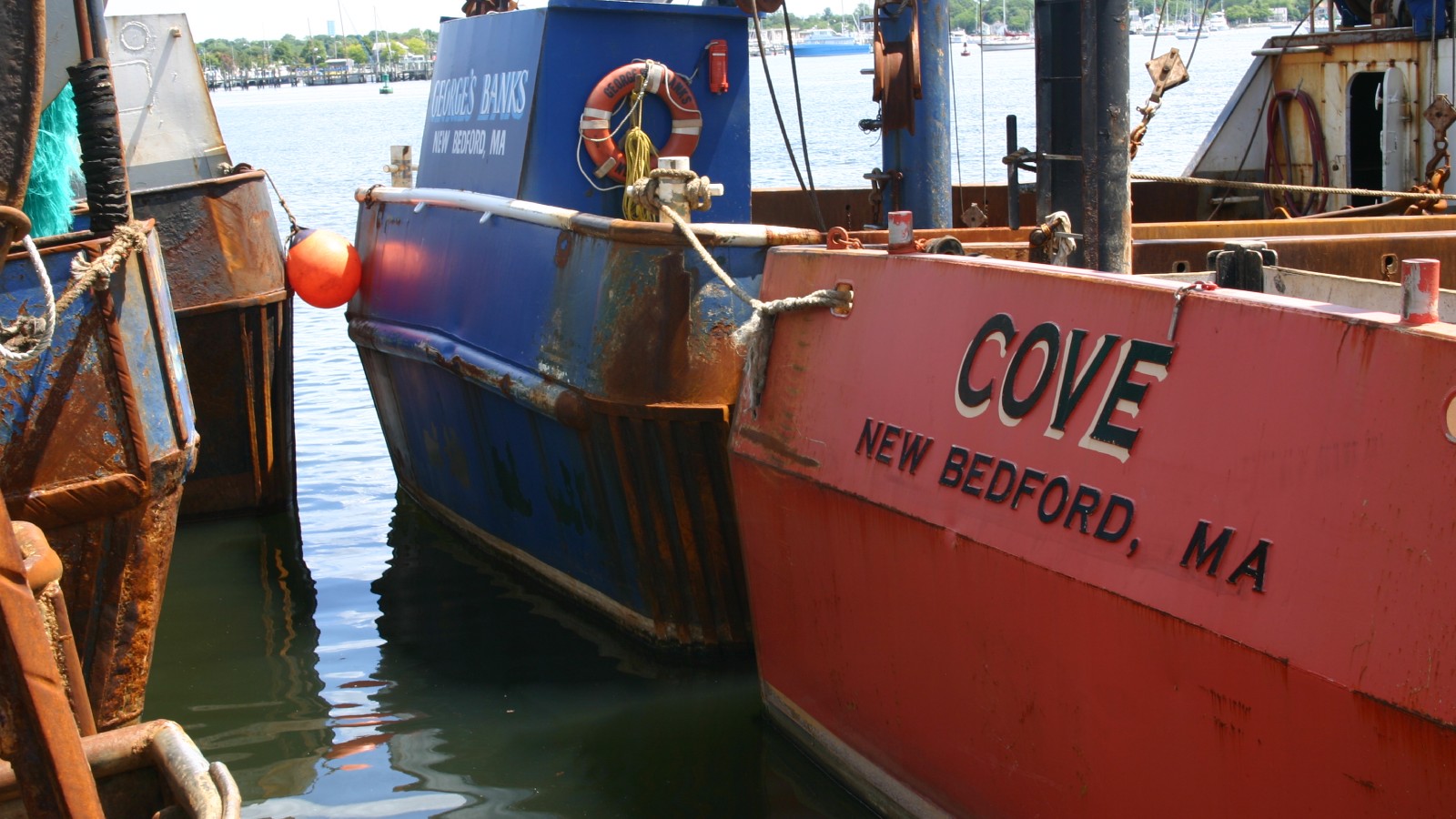

NEW BEDFORD The Trump administration's new seafood plan proposes a voluntary "U.S.-Caught" label, a review of fishing rules and help for docks, processors and aging boats, all aimed at the domestic commercial fishing industry. New Bedford is that industry's top U.S. port by value, by NOAA's count for 2023.
The America First Seafood Strategy, posted by NOAA Fisheries on Friday, Oct. 23, follows Executive Order 14276, which the president signed April 17, 2025. That order directed the Secretary of Commerce to "develop and implement an America First Seafood Strategy to promote production, marketing, sale, and export of United States fishery and aquaculture products and strengthen domestic processing capacity."
NOAA said the strategy "relies on existing authorities and programs, emphasizing coordination, barrier reduction, and measurable results rather than new spending initiatives."
What the label would mean
The proposed designation would mark products "harvested by American commercial fishermen on U.S.-flagged vessels under U.S. fisheries management," according to NOAA, and it would sit alongside existing country-of-origin labeling.
The Food and Drug Administration issued separate draft guidance on U.S.-origin statements on seafood labels alongside the strategy, gCaptain reported, and published notice of it in the Federal Register on Tuesday, Oct. 27. Once final, the guidance would give examples of U.S.-origin statements on seafood that the agency would consider truthful and not misleading. Using one would be voluntary, and companies that do should be able to back the statement up, the notice says. The guidance would cover single-ingredient seafood and the seafood in multi-ingredient foods.
The FDA estimates there are about 2,300 domestic seafood manufacturers, packers and distributors and that about half of them, 1,150 firms, would change labels to add or remove a U.S.-origin statement. At five labels per firm and $1,333 per label, the agency puts the one-time relabeling cost at $7,664,750.
Comments on the draft are due by Monday, Dec. 28, under docket FDA-2026-D-6729 at regulations.gov.
Rules, docks and imports
Under the strategy, NOAA will work with the regional fishery management councils on what it calls targeted regulatory reforms: "Ensuring catch limits reflect the best available science," "Reducing compliance costs that do not advance conservation" and making permits for marine aquaculture in federal waters more predictable.
A second part of the plan covers processing plants, cold and wet storage, working waterfronts, docks, shipyards and the aging fishing fleet. Federal agencies are to streamline permits and make better use of existing financing from the U.S. Department of Agriculture, the Small Business Administration and NOAA. NOAA will also review its Fisheries Finance Program and Capital Construction Fund to find what keeps fishermen from replacing older boats, gCaptain reported.
On imports, the plan calls for stronger enforcement of the Seafood Import Monitoring Program, targeted inspections of high-risk shipments and continued work with the U.S. Trade Representative on unfair trade practices and illegal fishing. It also proposes more American seafood in government food purchasing and a national "Eat American Seafood" campaign.
Commerce Secretary Howard Lutnick said the strategy ensures that the future of seafood in the United States "will be built by American fishermen, American workers, and American industry" rather than by foreign imports, gCaptain reported.
New Bedford by the numbers
In NOAA's most recent Fisheries of the United States report, covering 2023, New Bedford ranked first among U.S. ports in commercial fishing revenue at $363.3 million, down from $443.2 million in 2022. Fishermen landed 76.9 million pounds there in 2023. It was the 23rd year in a row that New Bedford had the nation's highest-valued catch, NOAA said, and sea scallops have historically made up most of the value landed there.
What happens next
The FDA will weigh comments before it writes the final version of the label guidance. NOAA said an annual report will track progress on seafood trade, and the waterfront and processing work will be judged by gains in domestic production and processing, private capital invested and less reliance on foreign supply chains.
Label: Reported by us, from the town's posted records.
Notes
Every fact about the strategy comes from NOAA Fisheries' Oct. 23 strategy page, the FDA's Oct. 27 Federal Register notice and Executive Order 14276, and New Bedford's figures come from NOAA's Fisheries of the United States 2023 report. The Commerce Secretary's quote and the finance program review are credited to gCaptain. We read them on Oct. 27. We checked each date and weekday against a calendar.
Corrections
No corrections to this story. If something here is wrong, tell us. Every correction is dated on the story and listed in our public log.
Sources (6)
- NOAA Fisheries: America First Seafood Strategy: Strengthening U.S. Fisheries, Coastal Economies, and Food SecurityLast updated Oct. 23, 2026. Read Oct. 27, 2026.
- Federal Register: U.S.-Origin Statements on Seafood; Draft Guidance for Industry; Availability (FDA, Docket No. FDA-2026-D-6729, FR Doc. 2026-21838)Published Oct. 27, 2026. Read Oct. 27, 2026.
- Executive Order 14276: Restoring American Seafood CompetitivenessSigned April 17, 2025. Read Oct. 27, 2026.
- NOAA Fisheries: Fisheries of the United States, 2023 (Table 3, commercial fisheries revenue at major U.S. ports)Posted February 2026. Read Oct. 27, 2026.
- gCaptain: Trump Administration Unveils Seafood Strategy to Boost U.S. Fishing Fleet and Domestic ProductionRead Oct. 27, 2026.
- WBSM: How Trump's New Seafood Strategy Is Pushing Millions into Massachusetts FishingRead Oct. 27, 2026.