




SOUTH COAST Updated 5:50 p.m. Nov. 17, 2026.
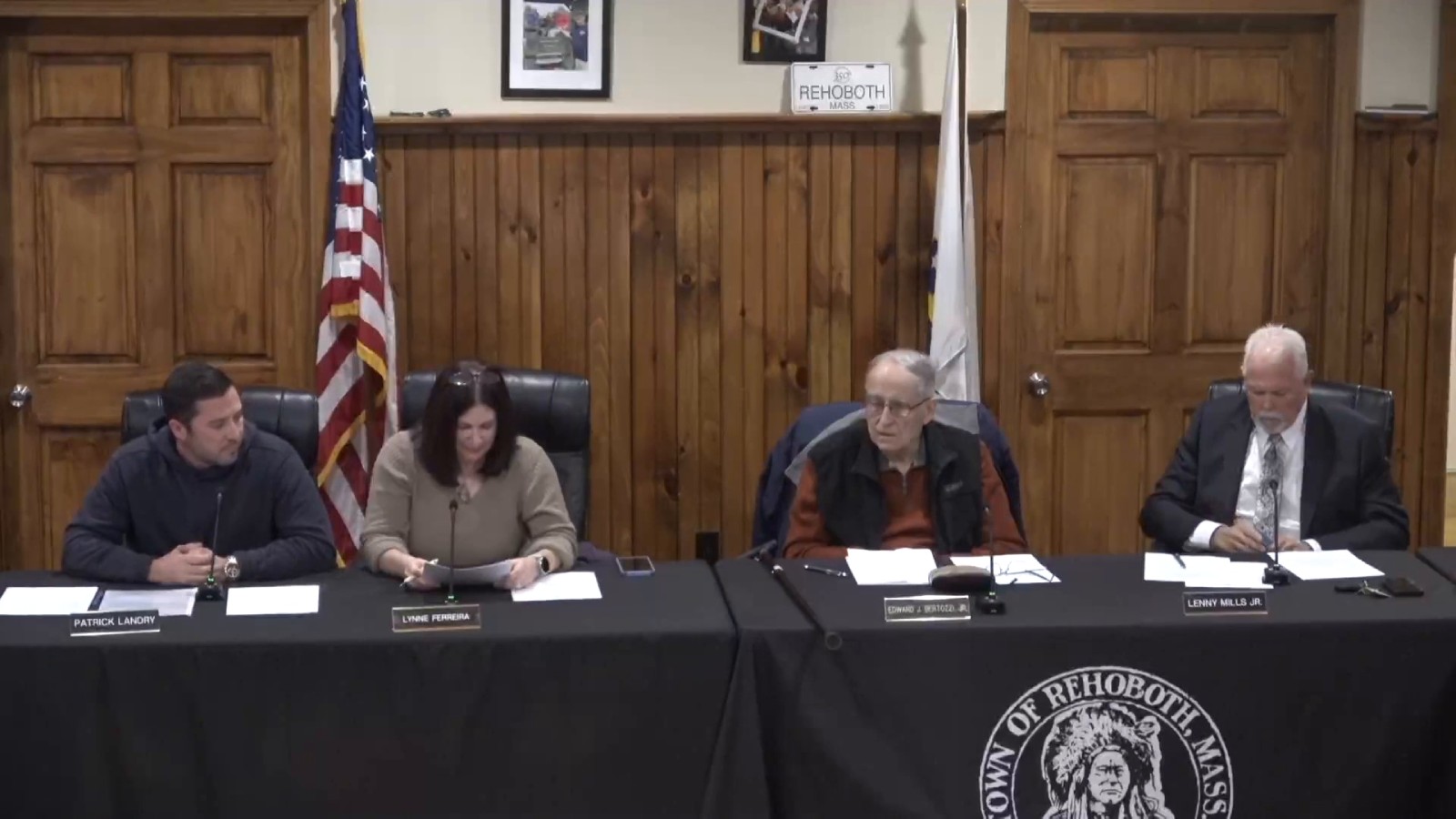
Three South Coast towns take up data centers this week, and on Tuesday night, Nov. 17, Rehoboth voters decide at a special town meeting whether to ban them in every zoning district.
Somerset's Planning Board meets an hour earlier that night, at 6 p.m., to discuss the selectmen's request for a hearing on a temporary moratorium, and on Wednesday, Nov. 18, at 7 p.m., Dighton's Planning Board opens a preliminary discussion of whether the town should consider data center rules, with no draft bylaw written, according to the board's office.
The three meetings are the latest in a run of local decisions that began Sept. 1, when New Bedford Mayor Jon Mitchell proposed a citywide ban. Since then Taunton and Middleborough have banned data centers, New Bedford's City Council has passed its ban to a second reading, and Freetown has opened a district for small centers only, while in Seekonk a ban fell short of the two-thirds vote it needed at town meeting Nov. 9, The Sun Chronicle reported.
Two companies are on the public record with plans here. One owns a Taunton industrial building and asked the city's light plant whether it could supply 24 megawatts for a tenant it would not name, and the other, an AI computing company tied to a New York self-storage firm, asked to present its plans in Swansea. The sites they describe, from 2 to 24 megawatts, all fall below the 25-megawatt line at which the governor's September order on data centers sets conditions for state permits.
This week's votes
Rehoboth's Article 10 would add a definition of a data center to the zoning bylaw and list data centers as a prohibited use in every zoning district. A building would count as a data center when more than 25% of its gross floor area is given to server racks, computing equipment and the gear that supports them, or when its main purpose is housing and running servers, whatever the floor area. The article also says a data center "shall not be considered a business or professional office use," and the Planning Board voted Oct. 28 to send it to town meeting.
The special town meeting starts at 7 p.m. Tuesday in the Heritage Meeting Hall, the former museum building at the Francis Farm complex. Because Article 10 changes the zoning bylaw, it needs a two-thirds vote, and at least 75 voters must be in the hall for the meeting to act on it, officials told selectmen Nov. 2. At the Oct. 28 hearing a Planning Board member reminded residents that the board's vote only puts the question on the warrant, and that the voters at town meeting make the law.
Somerset's board decides only a first step Tuesday, since a moratorium needs a Planning Board hearing and then a town meeting vote, and the hearing itself is not on this week's agenda. Selectmen Chairman Allen Smith told his board Oct. 28 that with no data center rule on the books, one would likely fit the town's wholesale business or storage category, "an approved use in an industrial zone, which makes it a use by right." He called a moratorium "pressing the pause button" and said he was not proposing a ban like Taunton's. Another selectman said during the debate that he is not against data centers, calling one "a sizable taxable project" at a time when some residents, seniors especially, struggle to pay their tax bills.
In Dighton, the Planning Board itself is bringing up a possible data center bylaw for preliminary consideration, and no draft bylaw or formal proposal exists, Kerrie Easterday, department manager for the Planning Board and Zoning Board of Appeals, told South Coast 360 on Nov. 17 in answer to questions we sent Nov. 11. "At this time, no draft bylaw or supporting documentation has been prepared," she wrote. The board will review the data center bylaw Mansfield recently approved "as a reference in determining whether similar regulations should be considered for Dighton," no public hearing has been scheduled, and if the board pursues a zoning change, the required public hearing would come before any town meeting vote, she wrote.
The board revised its agenda Nov. 16 to list the item as a "Potential Proposed Data Center Bylaw," according to the copy the town clerk stamped that afternoon. The version posted Nov. 10 had listed a proposed data center bylaw under the name of Brett Zografos, who will not attend Wednesday's meeting, Easterday said. Easterday's reply did not say in what capacity Zografos brought the bylaw forward, which South Coast 360 asked on Nov. 11. The meeting packet includes Mansfield's bylaw, which its town meeting passed by a two-thirds show of hands May 5, and September emails in which Zografos sent it to Dighton officials for a possible special town meeting article. Planning Board Chairman Jeffrey Carvalho replied that he was not sure the board could fit it in for that meeting, "but we should definitely discuss."
Where each community stands
| Community | What happened | Vote and date | What's next |
|---|---|---|---|
| Taunton | Banned data centers and adopted a one-year moratorium, with no exemption for existing buildings | Unanimous, City Council, Oct. 20 | The city calls the moratorium added protection if the ban faces a legal challenge |
| New Bedford | Mayor's citywide ban passed to a second reading | City Council, Nov. 13 | Needs a second vote with eight of the 11 councilors; next regular meeting Tuesday, Nov. 24, 7 p.m. |
| Middleborough | Ban in every zoning district, proposed by the Planning Board | Town meeting, Nov. 9; five voted no | Bylaw goes to the state attorney general for review |
| Freetown | District on two town-owned parcels off Howland Road for centers of 2 megawatts or less, by special permit; all others banned | 87 to 36, town meeting, Nov. 9 | Bylaw goes to the state attorney general for review |
| Seekonk | Planning Board's ban failed | Short of two-thirds, town meeting, Nov. 9 | Data centers stay under the existing zoning bylaw |
| Rehoboth | Ban in every zoning district, Article 10 | Planning Board sent it to town meeting Oct. 28 | Special town meeting Tuesday, Nov. 17, 7 p.m. |
| Somerset | Temporary moratorium proposed | Selectmen, voice vote, Oct. 28 | Planning Board discussion Tuesday, Nov. 17, 6 p.m. |
| Dighton | Preliminary discussion of a possible bylaw, with Mansfield's as a reference; no draft written | No proposal and no hearing set | Planning Board Wednesday, Nov. 18, 7 p.m. |
| Swansea | Edge Inference presentation postponed when the crowd overfilled the room; zoning allows only listed uses, and data centers are not listed | No vote; the town administrator said none is needed | No new date; not on the Nov. 17 selectmen agenda |
| Dartmouth | Data centers are not an allowable use under its zoning, the town says | No inquiries as of Nov. 9, the town said | Nothing proposed |
Who wants to build
In Taunton, VMD Industrial III LLC, an affiliate of V.M.D. Companies of North Andover, owns a building of about 158,000 square feet at 50 John Hancock Road in the Myles Standish Industrial Park, assessor records show. The company told councilors it bought the former retail printing building in 2022 and made many improvements to attract companies to it.
On Sept. 24, V.M.D. Companies asked the city-owned Taunton Municipal Lighting Plant whether it could serve a tenant needing 13 megawatts and then 11 more, "for a total of 24 MW at full buildout." It asked how much power the plant could deliver with no upgrades, what upgrades would involve, how long they would take and what they would cost, how service would hold up if equipment failed and what rate would apply, and it wrote that the cost of any upgrades would be its responsibility.
On Oct. 9 the company asked councilors to exempt existing buildings from the moratorium and, citing confidentiality, offered to name the tenant to them in a private meeting. "The 365-day moratorium will eliminate a potential tenant for our building," Director of Development Stephen Gallagher wrote, adding that "this tenant will not wait 365 days or longer to begin the infrastructure construction work." The council voted unanimously for the ban and the moratorium without the exemption, the city said.
In Swansea, the company is Edge Inference LLC, which lists its office at 395 Broadway in Saratoga Springs, N.Y., the same address Prime Group gives on its own website. The Herald News, which covered the Nov. 10 meeting, has described Edge as a side venture of Prime Group, a New York private equity firm that specializes in self-storage. It reported that more than 80 people overfilled the police station's conference room that night, that people questioned the claim of no municipal water, and that selectmen put the presentation off until they find a larger room.
Edge says its sites draw 2 to 20 megawatts inside buildings that already stand and that its "inference point" is "not a data center." The company applied July 28 for a federal trademark on that name, and the application, still under examination, covers services that include computer co-location, meaning space for servers belonging to others. In April, Prime Group said its digital infrastructure division had put edge data centers and battery storage at "numerous properties" in its nationwide portfolio, using technology from Microsoft and from Qcells, a Hanwha subsidiary, according to the company's release as carried by Modern Storage Media.
No Swansea site has been named. In Greenville County, S.C., an application filed through McGuireWoods Consulting for Robert Moser of Prime Storage describes a $100 million inference point using 5 megawatts at a self-storage location, WYFF reported.
"The Board does not need to vote on this issue; the company proactively reached out to us about presenting to the community," Swansea Town Administrator Mitchell Ruscitti wrote to South Coast 360 on Nov. 9, adding that the project "is not a traditional data center facility; there are no generators, and there is 0 water usage." He wrote that the company has talked of investing in community projects such as parks or playgrounds and wants to form a partnership with the town. Swansea's zoning bylaw allows only the uses listed in its table of uses, and data centers are not among them, its nearest category being publishing, data processing and computer software. The selectmen's Nov. 17 agenda has no item on Edge, and no new date has been set.
How much power
Edge says each site uses "about what one large industrial tenant uses" from the lines already on the street, with no new high-voltage lines. Running around the clock at 24 megawatts, the Taunton tenant's full buildout would use about as much electricity in a year as 31,000 Massachusetts homes, and the 5-megawatt site described in South Carolina about as much as 6,400 homes. That is our arithmetic, using the federal average of 570 kilowatt-hours a month for a Massachusetts home in 2024.
Nationally, data centers used about 4.4% of U.S. electricity in 2023 and could use 6.7% to 12% by 2028, according to a Lawrence Berkeley National Laboratory report for the Department of Energy. ISO New England, which runs the region's grid, reported in May that two large loads were in formal study across New England, together 285 megawatts at most, with no effect on demand expected before the winter of 2027 to 2028.
Your electric bill
To keep households from paying for the power lines and substations a data center needs, Gov. Maura Healey's Sept. 8 executive order says the Department of Public Utilities should keep giving priority to finishing rate schedules for large new customers, so "other ratepayers do not pay distribution grid upgrades or any associated infrastructure needed to support data center demand." On Sept. 24 the department ordered Eversource, National Grid and Unitil to list every project of more than 25 megawatts and every data center of more than 1 megawatt waiting to connect, with the share of upgrade costs expected to fall on the customer "versus ratepayers," in filings due Oct. 23.
Taunton's 24-megawatt request went to the city's own light plant, not to Eversource or National Grid. VMD wrote that the cost of upgrades for its tenant would be its responsibility, and it later told councilors the work was something "towards which we would contribute."
Water and noise
Mitchell's Sept. 1 letter to the council said data centers "have been shown to place significant demands on electrical and water infrastructure, generate noise from mechanical equipment and backup generators," and his statement after the Nov. 13 vote pointed to "the strain they have imposed on electric infrastructure and local water supply" in other cities. Edge says its sites use no city water and that the cooling liquid "is sealed inside and reused," and VMD told Taunton councilors in its Oct. 9 letter that "major water consumption is not needed" for its tenant. Nationally, data centers used about 66 billion liters of water directly in 2023, about 17 billion gallons, with 84% of it at the largest hyperscale and colocation centers, the Berkeley Lab report estimated.
On noise, Edge says its sites stay under 65 decibels at the property line, and VMD wrote that noise controls are part of its plan. Massachusetts measures noise against each site's own quiet background, and a source violates the Department of Environmental Protection's noise policy if it raises sound more than 10 decibels above that level.
Taxes and jobs
A 2024 state law exempts a qualifying data center from state sales tax on its equipment, software, electricity and construction for 20 years if it has at least 100,000 square feet, invests at least $50 million within 10 years and keeps at least 100 jobs in Massachusetts. Healey paused applications for it June 25, and the governor's tax expenditure budget, which estimates the exemption at $17 million a year in fiscal 2026 and 2027, says the Executive Office of Economic Development will not accept applications until it finishes regulations and an application form with the Department of Revenue.
The exemption does not touch the local property tax. Edge's website promises "tax base, not abatement" and says the company does not seek "decades-long abatements that remove property from the rolls."
Why towns are moving early
Edge's website also shows how it pitches its sites to towns: as a tenant fit-out in an existing building, with "no rezoning marathon," which it says "doesn't consume the planning department's hearing calendar or staff time the way a major rezoning would." Smith's point in Somerset was that, with no rule on the books, a data center could arrive there as a use allowed by right.
New Bedford's use rules, adopted in 2024, list data centers among general business and office uses and allow them by right in five districts, though the city had received no proposals when its Planning Board took up the ban, Assistant City Planner Michael McCarthy told the board Oct. 7. Mitchell's Sept. 1 letter said a ban would give city planners time to write a special permit process with performance standards. Taunton's Planning Board recommended turning the city's September draft, which would have allowed data centers by special permit in the industrial district at least 1,000 feet from any residential zone, into a ban.
In Middleborough, Planning and Community Development Director Leeann Bradley urged a ban before any proposal arrived. "As a planner, say no now, because we can take that back," she told town meeting, where a handful of residents spoke about possible economic benefits and five voters stood against the ban, Nemasket Week reported. Freetown chose a narrower path, allowing centers of 2 megawatts or less, by special permit and site plan review from the Planning Board, only on two town-owned parcels off Howland Road and banning all others, according to the article handout and the town clerk's unofficial record of the meeting.
What towns and the state can do
A town decides where a data center may go through its zoning bylaw, and a new or amended bylaw needs a Planning Board hearing and a two-thirds town meeting vote, under Section 5 of the state zoning law. Once adopted, it applies to building and special permits issued after the first newspaper notice of that hearing, under Section 6. A town's new zoning takes effect as of the town meeting vote once it is published, while the attorney general has 90 days to review it, and if the attorney general disapproves, the old bylaw is treated as having stayed in effect. In a city such as New Bedford, a zoning change takes effect when the council passes it and the mayor signs it, and New Bedford first advertised its hearing on the ban Oct. 9.
State law requires notice of a zoning bylaw hearing to be published in a newspaper twice and posted at town hall. A special permit, which any data center in Freetown's new district would need, requires its own public hearing, and the law counts abutters and neighbors within 300 feet as parties in interest, who are mailed the board's decision.
Under Executive Order 658, state agencies may not permit a data center drawing more than 25 megawatts until its developer meets the state's expectations on air, public health, water and community engagement and submits a community benefits agreement, and it bars agencies that issue permits from signing nondisclosure agreements with any data center project. The order sets Dec. 31 for state guidance to cities and towns weighing proposals.
The Legislature has not passed limits of its own. The energy affordability bill, whose House version includes rules for data centers of 20 megawatts or more, has sat with a House and Senate conference committee since July 16, and a bill filed Dec. 5, 2025, by state Rep. Rodney Elliott of Lowell, which would bar utilities from raising residential rates because of a data center able to use 10 megawatts or more, has been with the House Rules Committee since Dec. 11, 2025.
A proposed 2028 ballot law, Petition 26-08, would bar a city or town from permitting a data center unless its power supplier agrees not to raise other customers' costs and to supply it with renewable energy, and its water supplier certifies that the system can meet the demand without cutting service to existing customers. Local voters would also have to approve each one by a two-thirds vote, according to the attorney general's summary. Its backers must file 74,574 signatures with local election officials by Wednesday, Nov. 18, and with the secretary of the commonwealth by Dec. 2, the law firm Foley Hoag wrote.
Elsewhere in Massachusetts
In Westfield, the City Council approved Servistar Realties' $4 billion data center campus by a 9-3 vote in 2021 and gave it millions of dollars in property tax breaks. Built out over about 10 years, its 10 buildings would draw 274 megawatts. A nonprofit development firm hired by the developer estimated the state sales tax exemption could save the company up to $30 million a year. On July 6 the council voted unanimously for a one-year moratorium on additional data centers, which does not stop the approved project, and Lowell and Holyoke have also adopted moratoriums, The Boston Globe reported.
Boston.com has reported on two other towns. Mansfield in May adopted what officials there called the state's first dedicated data center zoning bylaw, allowing only centers of up to 2 megawatts, the same cap Freetown chose. In Sutton, the Kraft Group and Unified Global Packaging Group have proposed a 10-building campus that would draw about 900 megawatts at full build-out, and the developer values the first two buildings at about $3.35 billion, more than the roughly $2.85 billion at which all property in Sutton is assessed. The town manager estimated the first phase would pay about $10.4 million a year in property taxes starting in fiscal 2031, while resident Michael Galli said at the board's Nov. 10 meeting, "I don't want to see this town sell its soul and get stuck as kind of the dumping ground of the AI industry." The board took no vote, and no application has been filed.
Who we asked
South Coast 360 asked V.M.D. Companies on Oct. 28 and Nov. 5 about its Taunton plans, Prime Group Holdings' press office on Nov. 6 about its Swansea plans, and Ruscitti, Swansea Community Development Director John P. Hansen Jr. and Eversource on Nov. 12 about the site, zoning and power. We asked Freetown's Planning Board on Nov. 12 how the public was notified of its district, and New Bedford's mayor's office on Nov. 13 when the ban would take effect. None had answered as of Tuesday afternoon, Nov. 17, and their answers will be added here.
What happens next and how to weigh in
Rehoboth's special town meeting opens at 7 p.m. Tuesday, Nov. 17, in the Heritage Meeting Hall at the Francis Farm complex, where Article 10 needs two-thirds of the vote with at least 75 voters present. Somerset's Planning Board meets at 6 p.m. the same night in the first-floor hearing room at Town Hall, 140 Wood St., to discuss whether to hold a moratorium hearing.
Dighton's Planning Board meets at 7 p.m. Wednesday, Nov. 18, in the lower level of Town Hall, 979 Somerset Ave., and on Zoom (meeting ID 744 646 2815, passcode 651342, or by phone at 646-558-8656), and its agenda includes a public input period. The signatures for Petition 26-08 are due to local election officials the same day.
New Bedford's ban needs a second council vote, and the council's next regular meeting is Tuesday, Nov. 24, at 7 p.m., with its agenda due out Nov. 20. Middleborough's ban and Freetown's district go to the attorney general for review, Swansea has not set a new date for Edge's presentation, and the state guidance for cities and towns is due by Dec. 31.
When she signed her order Sept. 8, Healey put the choice in local hands. "Unless a community says yes to a data center, we're saying no," she said at a news conference that day, State House News Service reported.
Label: Reported by us, from the town's posted records.
Notes
Every fact comes from the records listed: the Rehoboth Planning Board notice and Rehoboth TV recordings, the Somerset Planning Board agenda and the Somerset Access Television recording, the Dighton Planning Board agenda and packet and an email to us from the board's department manager, the Swansea selectmen's agenda, Taunton's council packet and city update, New Bedford's ordinance, the mayor's letter and posted statement, the Planning Board's recommendation, the Committee on Ordinances report and the council agenda and calendar, Freetown's town clerk record, Dartmouth's and Swansea's emails to us, Swansea's zoning bylaw, state assessor parcel records, federal trademark records, Edge Inference's and Prime Group's websites, Executive Order 658, the Department of Public Utilities directive, ISO New England, the Energy Department and Berkeley Lab report, federal electricity data, the governor's tax expenditure budget, state law, the bill histories and the attorney general's petition summary. Nemasket Week, The Sun Chronicle, The Herald News, WYFF, Modern Storage Media, The Boston Globe, Boston.com, State House News Service and Foley Hoag are credited for what we report from them. The home counts are our arithmetic: megawatts times 8,760 hours, divided by 570 kilowatt-hours a month times 12. We read the records between Oct. 26 and Nov. 17, opened every one we could again on Nov. 16, reopened the Dighton agenda and rechecked our inbox for answers on Nov. 17, and checked each date and weekday against a calendar. Not heard: V.M.D. Companies, Prime Group Holdings, Swansea's town administrator and community development director, Eversource, Freetown's Planning Board and the New Bedford mayor's office.
Corrections
No corrections to this story. If something here is wrong, tell us. Every correction is dated on the story and listed in our public log.
Sources (53)
- Rehoboth Planning Board, Oct. 28, 2026, public hearing on the data center bylaw (Rehoboth TV recording)Rehoboth Community TV. Bylaw text read aloud (25% of gross floor area or primary purpose; "shall not be considered a business or professional office use"; prohibited use in the listed districts), roll call vote to send it to town meeting. Watched Nov. 11 and Nov. 16, 2026.
- Rehoboth Board of Selectmen, Nov. 2, 2026 (Rehoboth TV recording)Rehoboth Community TV. Special town meeting Tuesday, Nov. 17, 7 p.m., Heritage Meeting Hall at the Francis Farm complex; Article 10 two-thirds vote with at least 75 present. Watched Nov. 2, Nov. 11 and Nov. 16, 2026.
- Rehoboth Planning Board, Zoning By-laws: Data Centers, public hearing notice for Oct. 28, 2026Town of Rehoboth. Read Nov. 4, Nov. 11 and Nov. 14, 2026 (the town site refused our request Nov. 16; the text was confirmed that day from the Oct. 28 hearing recording).
- Town of Somerset, Planning Board agenda, Tuesday, Nov. 17, 2026, 6 p.m.Posted Nov. 10, revised Nov. 13, 2026: discussion of the selectmen's Oct. 29 request to consider a hearing on a temporary data center moratorium; Town Hall, first-floor hearing room, 140 Wood St. Read Nov. 16, 2026.
- Somerset Access Television, Somerset Selectmen, Oct. 28, 2026Motion to send a temporary moratorium bylaw to the Planning Board and the voice vote, remarks by Chairman Allen Smith and another selectman. Watched Oct. 29 and Nov. 16, 2026.
- Town of Dighton, Planning Board revised agenda and meeting packet, Wednesday, Nov. 18, 2026, 7 p.m.Revised again Nov. 16, 2026 (town clerk stamp 3:43 p.m.): item 4(a)(iii), "Potential Proposed Data Center Bylaw"; the Nov. 10 revision read "Brett Zografos, Proposed Data Center Bylaw." Public input; Town Hall lower level, 979 Somerset Ave.; Zoom meeting ID and passcode. Packet pages 172 to 186: September 2026 emails and the Mansfield bylaw with its town clerk's certification of the May 5, 2026, vote. Read Nov. 16 and Nov. 17, 2026.
- Kerrie Easterday, department manager, Dighton Planning Board and Zoning Board of Appeals, email to South Coast 360Sent Nov. 17, 2026, 2:28 p.m., in reply to our Nov. 11 questions: Zografos will not attend; the board brings the topic forward for preliminary consideration; no draft bylaw or supporting documentation prepared; Mansfield bylaw as a reference; no formal proposal, no public hearing scheduled. Read Nov. 17, 2026.
- Town of Swansea, Board of Selectmen amended agenda, Tuesday, Nov. 17, 2026, 6 p.m.Posted Nov. 12, 2026; no item on Edge Inference or an inference point. Read Nov. 16, 2026.
- Mass. General Laws chapter 40A, section 5Planning board hearing, newspaper and town hall notice, two-thirds vote, effective dates for towns and cities, attorney general review. Read Nov. 16, 2026.
- Mass. General Laws chapter 40A, section 6Zoning changes apply to permits issued after the first notice of the planning board hearing. Read Nov. 16, 2026.
- Mass. General Laws chapter 40A, section 9Special permits need a public hearing; decisions mailed to parties in interest. Read Nov. 16, 2026.
- Mass. General Laws chapter 40A, section 11Parties in interest include abutters and abutters to abutters within 300 feet. Read Nov. 16, 2026.
- Mass. General Laws chapter 40, section 32Town bylaws go to the attorney general, who has 90 days. Read Nov. 16, 2026.
- City of Taunton, Data Center Update Following City Council Vote (posted Oct. 22, 2026)Unanimous votes Oct. 20 to ban data centers and adopt a one-year moratorium, no exemption for existing buildings, and the reason for both. Read Nov. 16, 2026.
- Taunton Municipal Council agenda packet, Oct. 20, 2026Planning Board letter of Oct. 2, VMD Industrial III letter of Oct. 9, V.M.D. Companies letter of Sept. 24 to the Taunton Municipal Lighting Plant. Read Nov. 16, 2026.
- MassGIS Property Tax Parcels, fiscal 2026 assessor records for Taunton and FreetownTaunton Map 18 Lot 10, 50 A/B John Hancock Road, owner VMD Industrial III LLC, building area 158,185 square feet; Freetown 210-13 (49 Howland Road) and 209-1, owner Town of Freetown. Read Nov. 16, 2026.
- Mayor Jon Mitchell, letter to the City Council on the data center ordinance (Sept. 1, 2026)City of New Bedford. Citywide prohibition proposed; 2024 use rules allow data centers by right; demands on electrical and water infrastructure, noise; special permit process to follow. Read Nov. 16, 2026.
- New Bedford ordinance amending Chapter 9, Comprehensive Zoning, on data centersCity of New Bedford. Districts where data centers are now allowed by right (MUB, IA, IB, IC, WI). Read Nov. 16, 2026.
- New Bedford Committee on Ordinances report (Nov. 12, 2026)Oct. 26 public hearing, advertised Oct. 9 and Oct. 19, 2026; recommends approval. Read Nov. 16, 2026.
- City of New Bedford Facebook page, statement from Mayor Jon Mitchell after the council votePosted Nov. 13, 2026, as an image of the statement; read without a login Nov. 16, 2026.
- New Bedford Planning Board recommendation, Case 26-22, on the data center ordinanceOct. 7, 2026 hearing: favorable recommendation; Assistant City Planner Michael McCarthy said the city had not received any proposals. Read Nov. 16, 2026.
- New Bedford City Council agenda, Friday, Nov. 13, 2026, 6 p.m. (special meeting)City of New Bedford: "To be Passed to a Second Reading"; next regular meeting Tuesday, Nov. 24, agenda released Nov. 20. Read Nov. 16, 2026.
- New Bedford City Council meetings calendarCity Council, Tuesday, Nov. 24, 2026, 7 p.m. Read Nov. 16, 2026.
- Middleboro bans data centers (Nemasket Week, Christian Uva, Nov. 10, 2026)Ban passed at the Nov. 9 Fall Town Meeting, five votes against, residents on both sides, Leeann Bradley's remarks. Read Nov. 16, 2026.
- Freetown Town Clerk, unofficial record of the Nov. 9, 2026 Special Town Meeting, and the Article 11 handoutEmailed to South Coast 360 Nov. 10, 2026: Article 11 adopted as amended, 87 to 36 by hand count; Tier I (2 megawatts or less) by special permit and site plan review on Map 210 Lot 13 and Map 209 Lot 1 only. Read Nov. 10 and Nov. 16, 2026.
- Foxboro, Wrentham voters back data center bans (The Sun Chronicle, Stephen Peterson, Nov. 11, 2026)Seekonk ban short of two-thirds at town meeting Monday, Nov. 9. Read Nov. 16, 2026.
- Email from Dartmouth Communications Manager Jessica Dastous to South Coast 360Nov. 10, 2026: no inquiries as of Nov. 9; data centers not an allowable use under the town's zoning. Read Nov. 10 and Nov. 16, 2026.
- Town of Swansea Zoning Bylaw, Chapter 265, Article IV, Principal and Accessory UsesOnly uses listed in the table are allowed; no data center use listed. Read Nov. 16, 2026.
- Email from Swansea Town Administrator Mitchell Ruscitti to South Coast 360Nov. 9, 2026, 8:52 a.m. Read Nov. 9 and Nov. 16, 2026.
- Swansea meeting on data center postponed (The Herald News, Nick Rommel), as carried by Yahoo NewsCrowd of more than 80, the water question, Prime Group and Edge. Read Nov. 16, 2026.
- U.S. Patent and Trademark Office, INFERENCE POINT, Serial No. 50018919Edge Inference, LLC, filed July 28, 2026; under examination; services include computer co-location. Read Nov. 16, 2026.
- Edge Inference, LLC, Inference Points website2 to 20 megawatts, "not a data center," sealed cooling liquid, 395 Broadway, Saratoga Springs. Read Nov. 16, 2026.
- The Edge (Edge Inference, LLC), community and home pages"no rezoning marathon," the planning department quote, under 65 dBA, "Tax base, not abatement." Read Nov. 16, 2026.
- Prime Group website395 Broadway, Saratoga Springs, N.Y. Read Nov. 16, 2026.
- Prime Group to Deploy Nationwide Edge Data Centers, Battery Energy Storage Network (Modern Storage Media, Apr. 23, 2026)Prime Group's April 21 release: numerous properties, Microsoft, Qcells. Read Nov. 16, 2026.
- Proposed data center project could come to Greenville County (WYFF News 4, Nate Stanley)Application through McGuireWoods Consulting for Robert Moser of Prime Storage; $100 million, 5 megawatts. Read Nov. 16, 2026.
- Sutton residents voice fierce opposition to proposed Kraft data center (Boston.com, Annie Jonas, Nov. 11, 2026)900 megawatts, $3.35 billion first phase, $2.85 billion Sutton total, $10.4 million estimate, Galli quote, no vote, no application. Read Nov. 16, 2026.
- Mansfield data center bylaw (Boston.com, Annie Jonas, May 13, 2026)Tier I, up to 2 megawatts, only; first dedicated data center zoning bylaw, according to officials. Read Nov. 16, 2026.
- Westfield data center backlash (The Boston Globe, Hiawatha Bray, July 14, 2026)Approved 9-3 in 2021, $4 billion, property tax breaks, 10 buildings over 10 years, 274 megawatts, up to $30 million estimate, July 6 moratorium; Lowell and Holyoke moratoriums. Read Nov. 16, 2026.
- Executive Order No. 658 (Sept. 8, 2026)Office of the Governor. 25 megawatts, expectations, community benefits agreement, no nondisclosure agreements, Dec. 31 guidance, DPU rate schedules, June 25 pause recital. Read Nov. 4, Nov. 14 and Nov. 16, 2026.
- Department of Public Utilities, directive to the electric distribution companies on data center interconnection requests (Sept. 24, 2026)Lists of projects of more than 25 MW and data centers of more than 1 MW, cost shares "versus ratepayers," filings due Oct. 23. Agency PDF read Nov. 14 and Nov. 16, 2026.
- ISO-NE establishes forecast framework for data centers, other large loads (May 18, 2026)Two large loads in formal study, 285 MW at most. Read Nov. 16, 2026.
- Mass. General Laws chapter 64H, section 6, paragraph (zz)The qualified data center sales tax exemption: 100,000 square feet, $50 million within 10 years, 100 jobs, 20 years. Read Nov. 16, 2026.
- Governor's FY2027 tax expenditure budget, item 3.007, exemption for qualified data centers$17.0 million estimates for fiscal 2026 and 2027; certification applications not accepted until regulations and a form are done. Read Nov. 16, 2026.
- Massachusetts Department of Environmental Protection, sound form, as posted by the Town of SeekonkThe 10 decibel rule against ambient background. Read Nov. 16, 2026.
- U.S. Energy Information Administration, 2024 Average Monthly Bill, Residential (Table 5A)Massachusetts average monthly consumption, 570 kilowatt-hours. Read Nov. 16, 2026.
- Department of Energy, release on the Lawrence Berkeley National Laboratory 2024 United States Data Center Energy Usage Report (Dec. 20, 2024)About 4.4% of U.S. electricity in 2023; 6.7% to 12% by 2028. Read Nov. 16, 2026.
- Lawrence Berkeley National Laboratory, 2024 United States Data Center Energy Usage Report (LBNL-2001637)Direct water consumption, 66 billion liters in 2023, 84% at hyperscale and colocation centers. Read Nov. 14 and Nov. 16, 2026.
- Data centers subjected to local approvals under Healey order (State House News Service, Alison Kuznitz, published by The New Bedford Light, Sept. 9, 2026)Gov. Healey's remark at the Sept. 8 news conference. Read Nov. 16, 2026.
- H.5175, energy affordability bill, bill history and textConference committees appointed July 16, 2026; no later action. House text, Section 163: rules for data centers of 20 megawatts or more. Read Nov. 16, 2026.
- HD.5404, An Act relative to the cost of electricity at large and qualified data centers (Rep. Rodney M. Elliott)Filed Dec. 5, 2025; referred to House Rules Dec. 11, 2025; 10 megawatt definition and residential rate protection. Read Nov. 16, 2026.
- Attorney General, summary of Initiative Petition 26-08, regulating data centersSupplier contract (no cost increase for other customers, renewable energy), water supplier certification, two-thirds local vote. Agency PDF read Nov. 14 and Nov. 16, 2026.
- Initial Massachusetts 2028 ballot questions (Foley Hoag, State AG Insights)Signatures to local election officials by Nov. 18, 2026, and to the secretary of the commonwealth by Dec. 2, 2026. Read Nov. 16, 2026.