




DARTMOUTH Updated 9:08 a.m. Nov. 17, 2026.
Clarification, Nov. 17, 2026: An earlier version of this story's headline and summary could be read to say the sheriff asked Dartmouth for $10 million, and he did not. The roughly $10 million is what he said it would take to move the regional lockup to the county jail in Dartmouth, and he told the board his first choice is for the state to pay it and his second is for the 19 Bristol County communities that use the lockup to share it, and nothing was decided. The headline, summary and opening paragraphs have been revised.
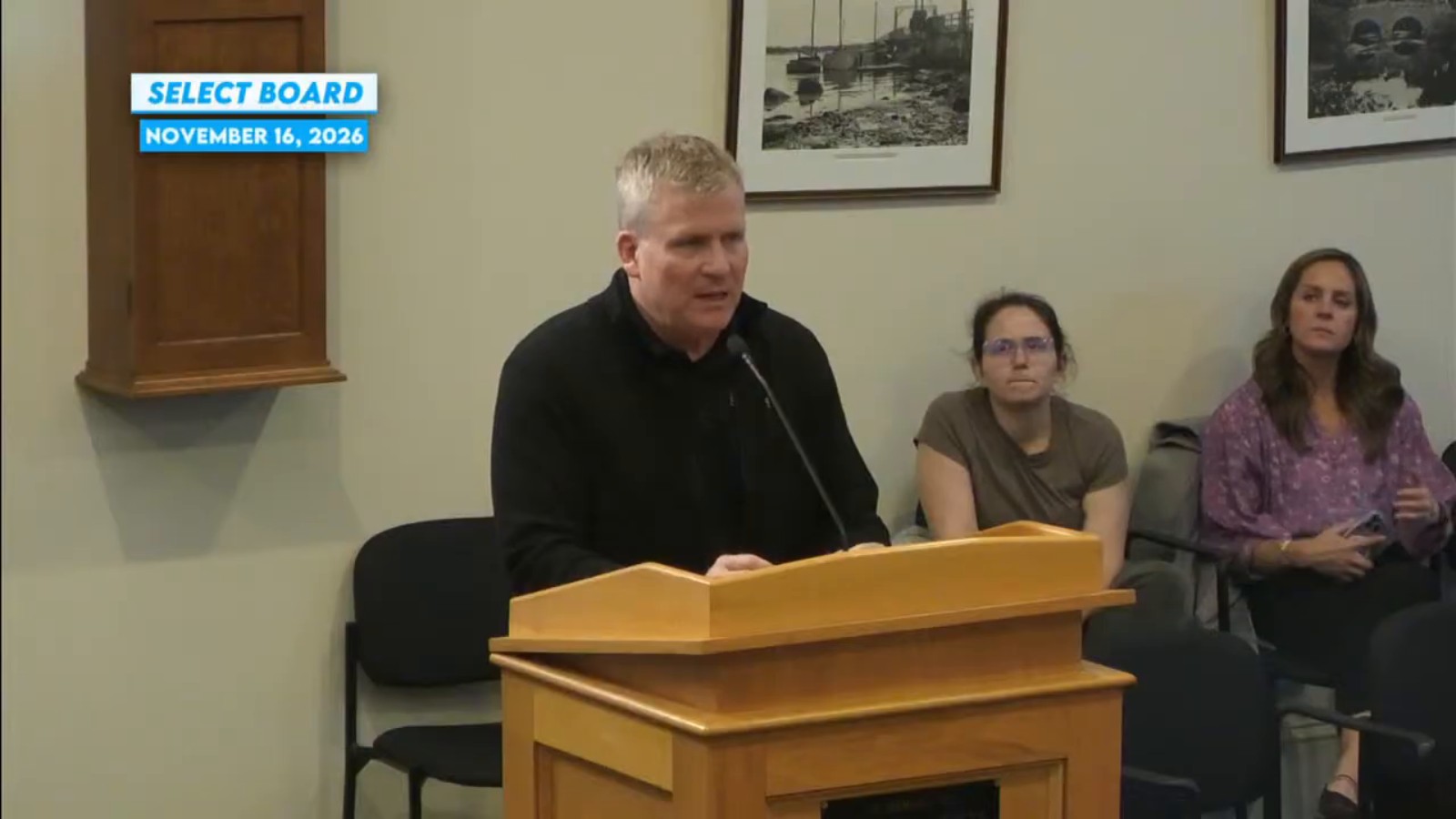
Bristol County Sheriff Paul Heroux said Monday that roughly $10 million in cell locks and toilets would let him move the regional lockup from New Bedford's Ash Street Jail to the county jail in Dartmouth.
Heroux did not ask Dartmouth for the $10 million, and he told the town's Select Board that his first choice is for the state to pay, and his second is an idea a board member raised at the meeting, having the 19 Bristol County communities whose police use the lockup share the cost, which Heroux said should be prorated by need.
Police in those communities bring people they arrest after court hours to the lockup at Ash Street, and the sheriff's office charges $75 a day for each person it holds. The board took no vote Monday.
Police Chief Brian Levesque, who brought the issue to the board last month, said he raised it now because the town is planning next year's expenses. The sheriff's office has offered the service for about 35 years, Levesque said, holding arrestees overnight or through a long weekend and taking them to court in the morning, which lets his department keep officers on the street.
What the sheriff told the board
Heroux said 11 of the 22 housing units at the jail in Dartmouth have no locks on their doors, and a cell cannot be locked unless it has a toilet. To keep the regional lockup after closing Ash Street, he said, he would need locks and toilets in only two of those units, the B and D units of the Women's Center, beside a sally port. He put the cost at roughly $10 million, and as high as $12 million, answering a board member who asked how much the Legislature would have to give the jail to keep serving every community it serves now.
His office applied to the state's capital asset agency, DCAMM, earlier this year for $27 million to put locks and toilets in six housing units, Heroux said, and was told it would hear back in July. It has not, he said, and that is why he wrote to the county's police chiefs in October with five options, including getting out of the lockup business or letting the departments run Ash Street themselves while his office keeps paying the building's utilities and maintenance. Asked when Ash Street would close, he said, "I would like to close it in 2027," and added that it is "an idea, not a plan."
About 48 corrections officers and security staff work at Ash Street, Heroux said, and bringing them back to Dartmouth would cut forced overtime that he put at 50,000 to 60,000 hours and more than $2 million a year, which he said burns out officers and drives them to quit. Closing the jail would also save about $800,000 a year in utilities and $800,000 for an expanded medical contract, plus maintenance, he said, and $10 million in locks would pay for itself in about three years.
"I've lost faith in our state delegation," Heroux said, adding that he has been asking for the money for three and a half years. State Rep. Christopher Markey filed a budget amendment to pay for the locks, he said. In an interview with South Coast 360 before the meeting, Heroux said what he is asking the state for is "a one-time cash infusion" of $10 million for locks in those two units.
What the board asked
Board member Nathan Silva said the timeline had taken members aback and that no one in the room was arguing to keep Ash Street open. If the problem is a $10 million capital cost, he said, it is "a math problem that 19 communities could probably get together and figure out." Silva said he is "not expecting the Bristol County Sheriff's Office to subsidize our needs," and noted estimates of $180,000 to $300,000 a year for the town to take on the work itself.
Heroux said the idea was not on his list of options, "but if that's what you're suggesting, I like it." Using round numbers, he said 20 cities and towns chipping in $500,000 each would come to $10 million, "again, let's prorate that based on what the needs are." Full state funding remains his first choice and Silva's idea his second, he said. If the communities paid for the locks, he said, he would be "very inclined" to have his office find a way to stop charging them the $75 daily fee.
Vice Chair Christopher O'Neil raised the cost of tearing down Ash Street and the future of the land, and asked why medical refusals have risen. Heroux said the state owns the building and that New Bedford's leaders should form a task force on its future use. Refusals are higher, he said, because the jail now screens arrivals more carefully on the advice of an expert on inmate suicide he brought in. In the interview before the meeting, he said his office's admission rules would still apply if the lockup moved to Dartmouth. "It's always going to have to be our rules," he said, because "we are not going to lower our standards."
O'Neil suggested convening regional planning officials to bring the other communities to the table and said any shared cost would have to be prorated, with New Bedford carrying more. Board member David Tatelbaum suggested the board work out a collaborative regional plan at a later meeting.
What Dartmouth could face
Asked whether Dartmouth should budget police overtime for fiscal 2028, Heroux said that if he ever decided to stop the service because the communities would not take part in a solution, he would tell every police department and community right away, and that he was not getting that sense from the board. He put Dartmouth's lockup bill at about $25,000 a year, and Levesque agreed. The fear when the town first heard about the change last month, one speaker at the table said, was the cost "going from $25,000 a year to $250,000."
Levesque said Dartmouth would have two to five people in custody at most over a long weekend. The station has three cells and a holding area that are rarely used because of the lockup, he said, but in an emergency "we do have the capacity, I think, to, for the most part, meet our needs if we needed to with the cells that we have." Heroux said the lockup takes about 3,000 people a year from 19 communities, with 6.9 in custody on an average day, and that Dartmouth sends people there infrequently.
Heroux told the board his office is not required to hold anyone for the towns and offers the lockup as a voluntary service. State law, Chapter 40, Section 34 of the General Laws, requires every town of more than 5,000 people to maintain a lockup for people arrested without a warrant, including their medication and meals.
South Coast 360 reported Nov. 13 on the sheriff's $27 million request and what the lockup means for other departments. On Monday night it asked every state senator and representative whose district includes part of Bristol County about the sheriff's requests for lock money. Two sent automatic replies, and none had answered by 10:15 p.m.
What happens next
Board members proposed bringing every community that uses the lockup into one room, and one member said Dartmouth would need answers in time for its June town meeting. Heroux said he would invite the select boards, city councils, mayors, administrators and police chiefs of all 19 communities to meet at the jail's training academy, form a smaller working group from there and invite the area's legislators too, though no date was set. The aim, he said, is a way "so everybody chips in, sort of prorated," with New Bedford paying the most.
Label: Reported by us, from the town's posted records.
Notes
Every fact comes from the Dartmouth Select Board's Nov. 16 meeting recording, item F, the posted agenda, the state lockup law, and South Coast 360's recorded on-the-record interview with Sheriff Paul Heroux that afternoon. We checked each quote against the recordings and each date and weekday against a calendar, and on Nov. 17 we went back to both recordings for every line on who would pay for the locks. Not heard: the state senators and representatives South Coast 360 asked Monday night; two sent automatic replies.
Corrections
No corrections to this story. If something here is wrong, tell us. Every correction is dated on the story and listed in our public log.
Sources (5)
- Dartmouth Community Media: Town of Dartmouth Select Board Meeting, November 16, 2026Item F, Bristol County Regional Lockup, about 7:05 to 8:25 p.m. Watched Nov. 16, 2026.
- Town of Dartmouth: Select Board meeting agenda, Nov. 16, 2026Item F and invited attendees. Read Nov. 16, 2026.
- Bristol County Sheriff Paul Heroux: recorded Zoom interview with South Coast 360, Nov. 16, 2026On the record, about 4:05 p.m.
- Massachusetts General Laws, Chapter 40, Section 34: Town; erection and maintenance of lockupRead Nov. 16, 2026.
- South Coast 360: Closing Ash Street Jail rides on a crowded state fund, and so does the lockup South Coast police rely onPublished Nov. 13, 2026.