




PLYMOUTH The average Plymouth single-family tax bill would rise about $317 in fiscal 2027 under the single tax rate the Board of Assessors recommends, because home values climbed faster than the rate fell.
The assessors propose a rate of $12.33 per $1,000 of assessed value for every class of property, down from $12.55 in fiscal 2026, according to their presentation in the Select Board's packet for Tuesday, Dec. 1. The average single-family home is now assessed at $652,656, up $36,662, and its bill would be $8,047.25, up from $7,730.72. The rate and every bill in this story are estimates until the state Department of Revenue approves the rate after the board votes.
The Select Board holds its yearly tax classification hearing at that meeting, with Director of Assessing Michael Hourahan presenting, and votes on the assessors' recommendation. The assessors ask for one rate for homes and businesses, as the town used in fiscal 2026, and for none of the three exemptions and discounts the board could also adopt at the hearing. The vote does not change the $251.1 million the town will raise in property tax. It decides how that total is divided between homeowners and the owners of commercial, industrial and personal property.
What the board is choosing
Plymouth's taxable value is about 87% residential, with commercial, industrial and personal property making up the other 13%, the assessors wrote in a memo to the board. Towns with large commercial bases, such as Avon, Boston and Braintree, often shift tax onto business property, they wrote, while towns with business bases as small as Plymouth's rarely adopt a split rate.
Holding the average home's bill near the fiscal 2026 figure would take a shift of 1.26, according to the memo. That would cut the average single-family bill by about $320 from the single-rate figure and raise the average commercial bill by $6,026.28, to $29,173.95. The median commercial bill would go up $2,166.75, the assessors' presentation shows.
| Shift | Home rate | Average single-family bill | Business rate | Average commercial bill |
|---|---|---|---|---|
| 1.00 | $12.33 | $8,047.25 | $12.33 | $23,147.67 |
| 1.10 | $12.14 | $7,923.24 | $13.56 | $25,456.81 |
| 1.20 | $11.96 | $7,805.76 | $14.80 | $27,784.72 |
| 1.26 | $11.84 | $7,727.44 | $15.54 | $29,173.95 |
| 1.30 | $11.77 | $7,681.76 | $16.03 | $30,093.85 |
| 1.40 | $11.58 | $7,557.75 | $17.26 | $32,402.99 |
| 1.50 | $11.40 | $7,440.28 | $18.49 | $34,712.12 |
Across the range in the table, the average home's bill would fall by as much as $606.97 a year from the single-rate figure, and the average commercial bill would rise by as much as $11,564.45.
Why bills rise under a single rate
With one rate for every class, a property's bill moves with its assessment. Residential values rose 6.8% in the fiscal 2027 assessments, which the state Bureau of Local Assessment certified Nov. 13, while commercial values rose 2.7% and industrial values fell 4.6%, the assessors' value summary shows. Total taxable value reached about $20.4 billion, up 6.2%.
The median single-family home, assessed at $587,600, would pay $7,245.11, up $288.64, the presentation shows. The average commercial property, at $1,877,346, would pay $23,147.67, up $38.11, because commercial values grew more slowly than homes.
The town's budget totals $379.8 million, with $128.7 million expected from sources other than the property tax, according to the assessors' levy calculation. The $251.1 million levy sits $1.1 million below the most Plymouth can raise for fiscal 2027 under Proposition 2 1/2, a ceiling that includes $3.8 million in new growth and $6.3 million in payments on debt that voters excluded from the limit.
Our Nov. 19 preview covered the town forecast that has spending outrunning revenue starting in fiscal 2028.
The tax breaks the assessors advise against
A residential exemption, which state law allows at up to 35% of the average residential value, takes a fixed amount off the assessment of each home that is the owner's main residence and raises the residential rate to make up the difference. The assessors ran a 25% exemption on fiscal 2026 values through the state's online calculator, with estimated shares of owner-occupied homes, to show the effect, and the residential rate came out at $15.66 instead of $12.55.
In that example, owner-occupied homes worth less than about $748,559 would have paid less and those worth more would have paid more. A $450,000 home would have saved $928.52, and a $950,000 home would have paid $626.48 more, the memo shows. Twenty-two communities adopted the exemption for fiscal 2026, generally places with many rental units, such as Boston and Cambridge, or many seasonal homes, such as Nantucket and Provincetown, the assessors wrote.
A small commercial exemption of up to 10% would go to owners of commercial property assessed at under $1 million whose occupants have 10 or fewer employees, and under state law the tax it saves would be paid by other commercial and industrial property. Fourteen communities adopted it for fiscal 2026, including Dartmouth and Seekonk, and all of them also have a split rate, the memo shows.
With Plymouth's small commercial class, the assessors wrote, that exemption "could cause hardship for some local businesses." Many small businesses rent rather than own, so the savings would go to the building owner, and "there is no guarantee that the savings would be passed on to the tenants," they wrote.
No land in Plymouth is classified as open space, so an open space discount would have no effect, according to the assessors, who encourage owners to use the state's farm and forest land programs instead. Applications for those programs are due each Dec. 1, the office's deadlines page shows.
Help that does not depend on the vote
Whatever the board decides, the Assessors' Office takes applications each fall until April 1 for exemptions set by state law, including those for veterans with a war-related disability or their surviving spouses, legally blind residents, residents 65 and older, and surviving spouses, plus a tax deferral that lets owners 65 and older put off the tax until the home is sold or the owner dies, the office's exemptions page shows.
The same page points older owners to the state's Circuit Breaker income tax credit, for people 65 and older whose property taxes are more than 10% of their income, and to the town's senior and veteran tax work-off program, which drew 101 applicants for 30 spots this fall, as we reported Nov. 10.
Also on the agenda
The board will vote on an insert for the third and fourth quarter real estate bills telling taxpayers that online tax payments move back to Unipay on Jan. 1, 2027, according to a Nov. 18 memo from Treasurer and Collector Patricia Meachen. Taxpayers enrolled in autopay or paperless billing with Invoice Cloud will get emails about the change, and online water and sewer payments stay with Invoice Cloud for now, she wrote.
Commissioner of Health and Human Services Michelle Bratti will present the town's community health assessment and improvement plan, which drew 1,228 survey responses and sets four priorities, including housing affordability, with work groups to start in 2027, according to the slides in the packet. Police Chief Dana Flynn and Fire Chief Neil Foley are also scheduled to present public safety data.
How to weigh in
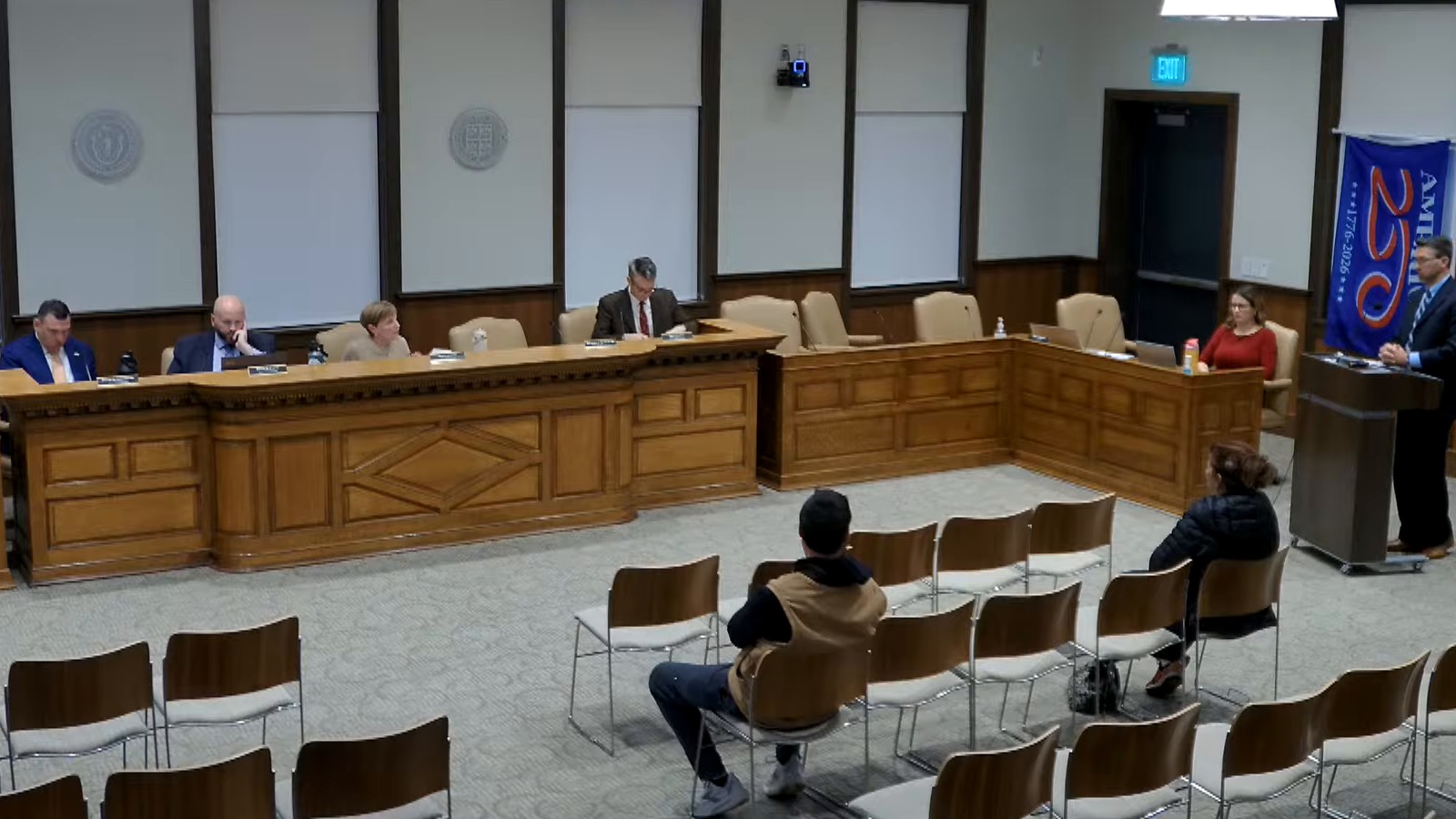
The board meets in the Great Hall on the second floor of Town Hall, 26 Court St., and returns to open session at 6 p.m. after a 5 p.m. closed session. The meeting is hybrid, with a Zoom link on the agenda for anyone who wants to take part remotely, and it airs live on The Local Seen on Comcast Channel 9 and Verizon Channel 47 and on the station's website. The agenda lists public comment before the presentations and the hearing.
The Assessors' Office is at Town Hall, 508-322-3430, assessors@plymouth-ma.gov, and is open Tuesdays until 6:30 p.m., the town's directory shows.
What happens next
Once the board votes, the state Department of Revenue reviews the town's tax rate recapitulation and approves the rate. The recap in the packet lists a reviewer but no approval yet, and the board's next meeting is Dec. 8.
The town's deadlines page lists Dec. 31 for mailing the third quarter bill, the first to show the new assessment and the year's tax. Owners who think their property is overvalued or wrongly classified can apply to the assessors for an abatement once that bill arrives. Under state law the application is due by the date the first actual tax bill of the fiscal year must be paid, which the town's page lists as Feb. 1.
South Coast 360 asked the Board of Assessors on Wednesday, Nov. 25, about the recommendation and the bill dates, and asked the town's communications coordinator the same day for the full community health assessment report. This story will be updated with their answers.
Label: Reported by us, from the town's posted records.
Notes
Every fact comes from the Plymouth Select Board's agenda and packet for Tuesday, Dec. 1, including the Assessors Office memo, the assessors' fiscal 2027 classification presentation, the state LA4 and tax rate recap forms, the treasurer and collector's Nov. 18 memo and the health assessment slides, and from the town's Assessors' Office pages, including its exemptions and deadlines pages. The abatement deadline comes from Chapter 59, Section 59 of the state's laws, and the small commercial exemption rules from Section 5I. We read them on Nov. 25, 2026. We recomputed the bills from the values and rates in the presentation, and they match to the cent. The figures are estimates until the state approves the rate. We asked the Board of Assessors and the town's communications coordinator our questions by email on Nov. 25, 2026. We checked each date and weekday against a calendar.
Corrections
No corrections to this story. If something here is wrong, tell us. Every correction is dated on the story and listed in our public log.
Sources (10)
- Plymouth Select Board: agenda and packet, Tuesday, Dec. 1, 2026 (93 pages; posted stamp 2:47 p.m. Nov. 25, 2026)Agenda (pages 1 to 3); treasurer and collector memo on the Unipay insert, Nov. 18 (pages 11 and 12); tax classification cover and proposed motion (page 38); Assessors Office memo (pages 39 to 44); LA4 and LA4 comparison (pages 45 to 48); tax rate recapitulation (page 49); assessors' presentation with value summary, levy calculation, key changes and shift tables (pages 57 to 69); community health assessment slides (pages 70 to 93). Read Nov. 25, 2026.
- Plymouth Agenda Center: Select Board Dec. 1, 2026, agenda versionsListing for the posted agenda. Read Nov. 25, 2026.
- Town of Plymouth: Assessors' Office pageOffice email assessors@plymouth-ma.gov and Director of Assessing Michael Hourahan. Read Nov. 25, 2026.
- Town of Plymouth staff directory: Assessors' OfficeHours (Tuesday 7:30 a.m. to 6:30 p.m.), 26 Court St., 508-322-3430. Read Nov. 25, 2026.
- Massachusetts General Laws, Chapter 59, Section 59: abatementsAn owner aggrieved by a tax may apply in writing to the assessors for an abatement on or before the last day for paying the first installment of the actual tax bill issued once the rate is set. Read Nov. 25, 2026.
- Town of Plymouth: Assessors' Office, Property Tax ExemptionsExemptions under Clauses 17E and 17F, 18, 22, 37A, 41D, 42 and 43, the Clause 41A deferral, the Circuit Breaker credit and the senior and veteran work-off program; applications accepted until April 1. Read Nov. 25, 2026.
- Town of Plymouth: Assessors' Office, Important Dates and DeadlinesDec. 31 mailing of the third quarter bill with the new assessment; Feb. 1 due date and last day to file an abatement; Chapter 61, 61A and 61B applications due Dec. 1. Read Nov. 25, 2026.
- Massachusetts General Laws, Chapter 59, Section 5I: small commercial exemptionUp to 10% of value for class three parcels assessed under $1 million and occupied by businesses with no more than 10 employees; the exemption is borne by commercial and industrial property. Read Nov. 25, 2026.
- South Coast 360: Plymouth tax work-off lottery: 101 applicants, 30 spots (Nov. 10, 2026)Our earlier reporting on the senior and veteran tax work-off program.
- South Coast 360: Plymouth gets first look at fiscal 2028 budget requests (Nov. 19, 2026)Our earlier reporting on the town budget forecast.